
.png)
Different Hand Embroidery Techniques: How to Spot Value
Choosing a hand-embroidered gift often feels like comparing two paintings that share the same scene but carry completely different stories. One piece may take weeks of patient stitching while another is produced in hours, yet to an untrained eye they seem almost identical. Buyers regularly encounter price differences of 3–10× between similar embroidery designs because the true value lies beneath the surface: the techniques, the artisan's skill, and the cultural heritage woven into every stitch. This guide will help you recognize different hand embroidery techniques so you can choose a gift with confidence and meaning.
What are the main hand embroidery techniques buyers should recognize before choosing a gift?
Buyers should recognize 6 value signals in different hand embroidery techniques: outline clarity, smooth fill, grid precision, raised texture, metallic shine, and 3D relief.
| Technique / stitch | What to inspect | Gift-value meaning |
|---|---|---|
| Backstitch / running stitch | Clean, continuous outlines | Good for names, borders, subtle motifs |
| Satin stitch | Smooth, glossy filled areas | Elegant for monograms, petals, logos |
| Cross stitch | Even “X” grid | Precise, charming, less formal |
| French knot / chain stitch | Raised dots or linked texture | Adds hand-made surface life |
| Goldwork | Metallic thread, slight relief | Strong luxury and ceremonial signal |
| Stumpwork | Raised petals, leaves, insects | Collector-level dimensional craft |
A technique is the overall method; a stitch is the needle movement inside that method. One piece may combine several stitches, so value comes from control, material, time, and appropriateness—not stitch count alone. Long satin stitches, metallic thread, knots, and 3D details may require more careful storage.
For a VIP gift, the safest question is not “Is it handmade?” but “Which technique is used, where are the hand stitches visible, and how should it be cared for?”
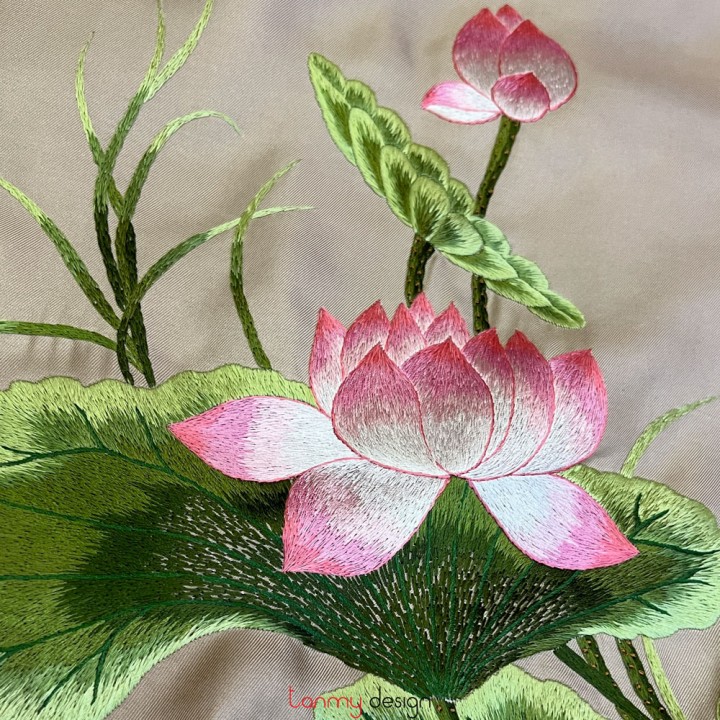
How can you tell if a hand-embroidered piece is truly handmade, not machine-made?
Use a 3-part check: front stitch variation, reverse-side thread routing, and defect control together reveal handmade likelihood better than any single cue.
| Checkpoint | Likely hand embroidery | Likely machine embroidery | Defect, not “handmade charm” |
|---|---|---|---|
| Stitch rhythm | Micro-variation in length, angle, spacing | Highly repeated, mechanically even fills | Large jumps, missed stitches, broken outlines |
| Back side | Small knots, short tails, individualized starts/stops | Bobbin thread, systematic routing, carried threads | Bird-nesting, bulky knots, long floating threads |
| Tension | Soft relief; fabric still lies flat | Dense, regular, sometimes stiffer texture | Puckering, loops, fabric drag |
| Motif repeats | Similar but not identical petals, lines, fills | Near-identical repeated motifs | Missing details or distorted symmetry |
Different hand embroidery techniques can look extremely neat, so “too perfect” is only a warning sign, not proof. For VIP gifting, ask to inspect the reverse side or request process evidence before paying a handmade premium.
I’ll turn the supplied comparison table into a compact, showroom-ready section with a direct answer first, then a practical value table and a brief buyer-facing human layer.
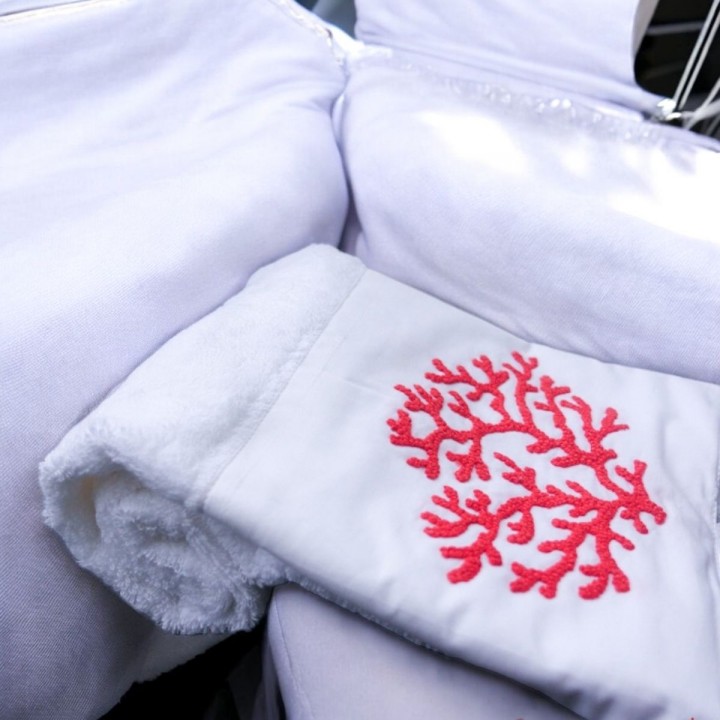
Which embroidery techniques make a gift feel more refined when seen up close?
Refined hand embroidery looks most valuable up close when satin stitch gives smooth coverage, long-and-short stitch blends tones, and split/couching controls edges.
| Close-up luxury signal | Best technique | What to inspect |
|---|---|---|
| Smooth, glossy surface | Satin stitch | No fabric gaps, broken shine, puckering, or bulky ridges. |
| Soft shaded petals/leaves | Long-and-short / silk shading | Colours should merge gradually, not step into visible blocks. |
| Crisp outlines or monograms | Split stitch / couching | Edges should stay sharp under close inspection. |
| Controlled raised texture | French knots | Knots should look intentional, not randomly lumpy; clustered knots create a nubby 3D surface. |
Boundary: dense stitching is not automatically better; overpacking can distort fabric or make a premium gift look heavy.
When choosing for a VIP gift, the safest question is: “Will this still look calm, clean, and deliberate when held in the hand?”
Why do Vietnamese hand embroidery techniques carry more gift value than decoration alone?
Vietnamese hand embroidery carries gift value because it combines 3 proof layers: heritage lineage, hand technique, and symbolic motifs such as lotus, bamboo, cranes, and áo dài.
For high-end gifting, different hand embroidery techniques signal more than surface beauty. Slow hand stitching shows artisan labor; silk-thread shading shows skill; double-sided or layered embroidery shows technical refinement. Heritage sources link Vietnamese embroidery to village transmission, Hanoi Old Quarter workshops, and family craft lineages, while gifting sources position lotus scarves, embroidered silk works, and décor as partner, diplomatic, and foreign-guest gifts. The decision meaning is clear: the buyer is not only giving an object, but a traceable Vietnamese story.
The value weakens when provenance, maker, motif meaning, or technique cannot be explained.
A worthy embroidered gift must survive the moment when the recipient asks, “What does this mean?”
At a partner dinner, the hesitation is not price alone. It is the fear of handing over something beautiful but hollow. A lotus-embroidered silk piece feels safer when the giver can explain the motif, the handwork, and the Vietnamese lineage behind it. The gift becomes less like decoration and more like a respectful cultural message.
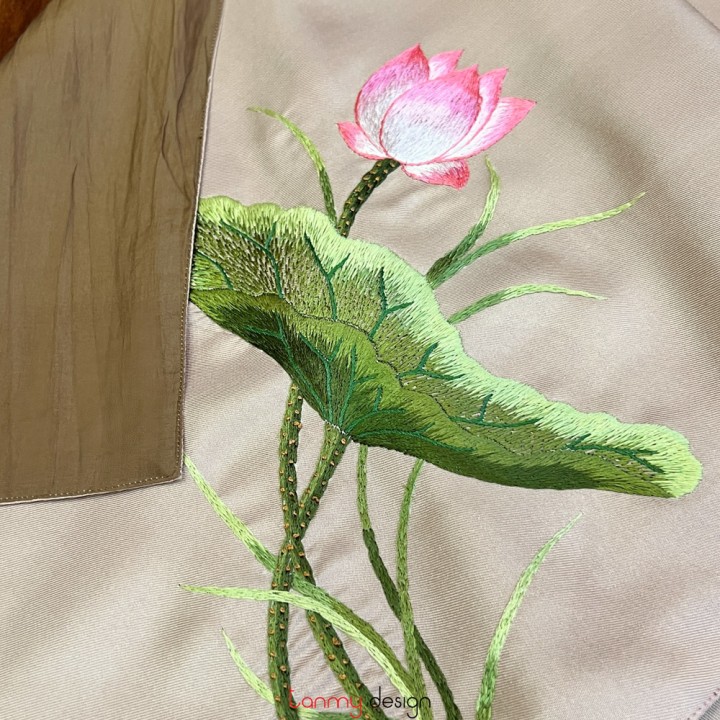
What 5-step framework helps you evaluate the value of a hand-embroidered gift?
Use A.R.T.V.F to evaluate a hand-embroidered gift in 5 checks: Authenticity, Refinement, Technique, Vietnamese Story, and Fit before judging price. Good hand embroidery should show even tension, flat threads, secure backs, and no puckering or distortion; slight hand variation is acceptable, but warped fabric is a red flag.
- Authenticity: ask which steps were hand-done and look for controlled micro-variation, not machine sameness.
- Refinement: inspect edges, thread trimming, fabric surface, and reverse-side neatness.
- Technique: compare different hand embroidery techniques by stitch density, shading control, tension, and difficulty.
- Vietnamese Story: require a specific motif, place, artisan, or cultural reference, not a vague “Asian handmade” story.
- Fit: match motif, color, and symbolism to the recipient and occasion, because gifts carry social and emotional value.
A piece can still be handmade but not gift-worthy if its provenance is unclear, finish is rough, or symbolism feels too personal for a VIP occasion.
Technical proof becomes meaningful only when it lowers the buyer’s fear of giving something beautiful but hollow.
For a partner or VIP gift, the decisive moment is often close-up inspection: the fabric lies flat, the stitches feel deliberate, and the story can be explained in one dignified sentence. That is when hesitation shifts from “Is this mass-produced?” to “This has enough substance to represent my respect.”
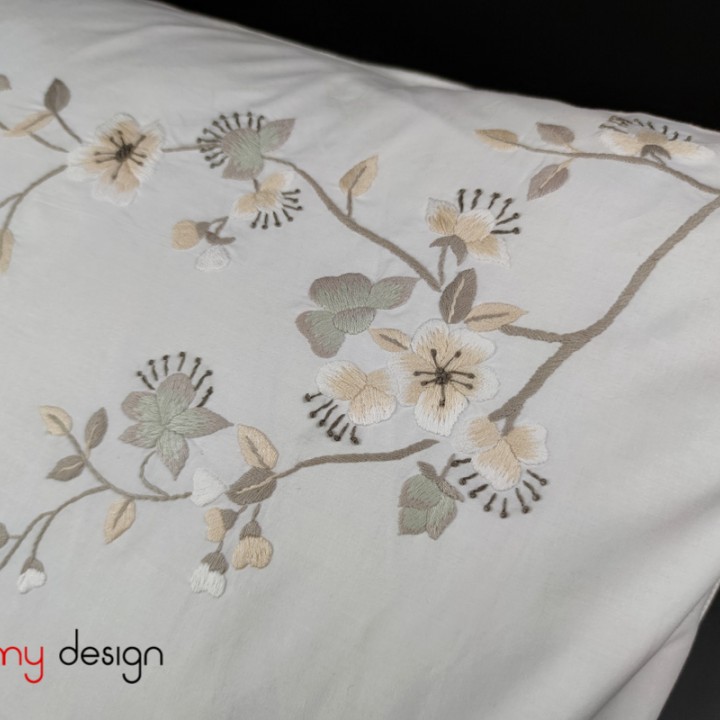
Which hand embroidery techniques are best for different VIP gifting occasions?
Different hand embroidery techniques should match occasion risk: double-sided work for diplomatic display, shadow work for refined executives, and compact surface embroidery for travel-friendly VIP gifts.
| VIP occasion | Best technique | Why it fits | Value signal to check |
|---|---|---|---|
| Diplomatic / embassy gift | Double-sided embroidery | Formal, display-worthy, culturally prestigious | Clean reverse side, hidden knots, balanced motif |
| Corporate partner | Fine surface embroidery | Professional, neutral, easy to brand subtly | Even stitch density, silk thread, restrained logo |
| International guest | Shadow work or landscape embroidery | Reads as Vietnamese, portable, story-rich | Lotus, scenery, áo dài, clear origin card |
| Executive thank-you | Minimalist silk embroidery | Elegant, personal but not intimate | Monochrome thread, refined finishing, calm motif |
| Personal VIP / patron | 3D or artist-led embroidery | Feels rare, curated, collectible | Limited piece, maker story, visible hand detail |
| Premium souvenir | Simple hand-finished embroidery | Scalable, packable, low misfit risk | Lightweight linen/cotton, durable edge finishing |
Avoid political, religious, oversized, or heavily branded motifs unless protocol and recipient context are confirmed.
Learning to recognize different hand embroidery techniques is less about becoming an embroidery expert and more about asking better questions before you buy. No visual checklist guarantees authenticity on its own, and even experienced collectors sometimes examine the reverse side or artisan background before making a decision. If you're looking for a Vietnamese gift with lasting cultural value, visit Tân Mỹ Design to explore handcrafted embroidery accompanied by the stories, craftsmanship, and heritage that make every gift worthy of the occasion.
FAQ
What are the main different hand embroidery techniques?
The most common different hand embroidery techniques include satin stitch, chain stitch, stem stitch, French knots, cross-stitch, couching, and thread painting. Each creates a different texture, line, or surface depth.
How can I tell hand embroidery from machine embroidery?
Hand embroidery usually shows slight stitch variation, softer rhythm, and irregular thread tension. Machine embroidery often looks more uniform, repeated, and precise across the whole motif.
Why is hand embroidery more valuable for premium gifts?
Hand embroidery carries value because it depends on artisan skill, time, and judgment, not only pattern reproduction. Complex motifs require hand control, especially when fine detail or emotional expression matters.
Is machine embroidery always lower quality?
No. Machine embroidery can be clean, durable, and consistent. It becomes less suitable when the gift needs visible craftsmanship, cultural depth, and a non-mass-produced feel.
What should I check before buying an embroidered Vietnamese gift?
Check stitch variation, reverse-side finishing, fabric quality, motif meaning, artisan provenance, and whether the piece is handmade or machine-assisted. For VIP gifting, authenticity should be verified before price.
Other articles
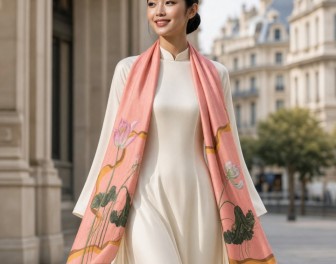
Vietnamese Silk Scarf Motifs: Meanings & Gift Choices
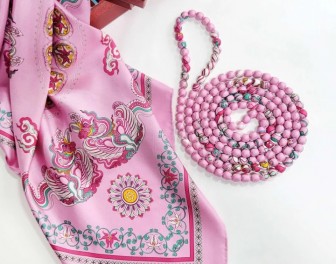
Square vs Long Silk Scarf: Which Makes a Better Gift?
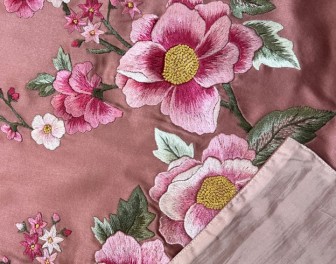
Hand-Embroidered vs Printed Silk Scarves: Which to Gift?
_cr_720x720_cr_336x264.jpg)
Meaningful Personalized Gifts: What Makes Them Feel Truly Special



Add: 61 Hang Gai St., Hoan Kiem Dist., Hanoi, Vietnam
Hotline: +84 936631368
Email: info@tanmydesign.com