
.png)
Can You Machine Wash Hand Embroidery? Before You Risk It
People often ask, “Can you machine wash hand embroidery?” It sounds like asking whether a family heirloom can survive one more move. The fabric might come through the cycle, yet the fine stitches, crisp shape, or rich colors that made it special can quietly change. Museum conservators approach embroidered textiles with testing and the least intervention possible because water and agitation sometimes leave damage that cannot be undone. That shift in thinking matters even more when the piece is meant to remain worthy of giving, displaying, and remembering.
Can you machine wash hand embroidery, or is that the fastest way to ruin it?
You can machine wash hand embroidery only when the care label permits cold delicate washing; for luxury pieces, machine washing is usually the fastest route to visible loss.
The decision rule is stricter than ordinary garment care: hand embroidery → raised thread structure → high abrasion risk; water exposure → dye migration, shrinkage, tide lines, corrosion, or mold risk in sensitive textiles; wet cleaning → irreversible treatment in conservation logic.
The Canadian Conservation Institute states that textile wet-cleaning can cause irreparable damage and requires colourfastness testing before treatment, while Getty conservation guidance warns that cleaning needed for preservation can still alter an embroidered object irreversibly. A laundry bag reduces snagging, but it does not remove spin friction, detergent exposure, dye bleed, backing failure, or thread fatigue.
For a VIP gift, the real test is not “can it survive?” but “will the stitches still look crisp, refined, and presentable?” This aligns with trust-first content guidance: care advice must prioritize accuracy, safety, and reliability over convenient shortcuts.
If the piece is silk, wool-threaded, vintage, bead-adorned, metallic, dark-dyed, unlabeled, or emotionally irreplaceable, use hand washing after testing - or specialist cleaning.
That technical caution becomes a buying decision when the object must carry respect, not just decoration.
I would hesitate before placing a hand-embroidered gift in a machine, even on “gentle.” The worry is physical: a raised flower catching, a red thread bleeding into pale cloth, the surface losing that quiet handmade relief. That is wet-cleaning irreversibility - the fear that one normal wash makes a prestigious gift feel used, flattened, and less worthy.

Why does hand embroidery get damaged in a washing machine even on a gentle cycle?
A gentle cycle reduces agitation and spin, but hand embroidery can still be damaged because the machine continues to create wet movement, friction, pressure, and tension across the stitches. The keyword question, “can you machine wash hand embroidery,” should not be answered by the cycle label alone; the real risk comes from how the embroidered textile behaves under repeated bending, rubbing, soaking, and spinning.
Hand embroidery is a composite structure: the ground fabric, embroidery thread, raised stitches, knots, metallic accents, beads, and backing may each react differently to water and movement. Cold water can reduce heat-related risks such as shrinkage, dye bleed, and puckering, but it does not remove mechanical stress. A mesh bag can reduce snagging against zippers, Velcro, or drum ribs, yet the fabric still presses against the bag and moves inside the washer.
The most common damage chain is: agitation creates abrasion, tumble impact creates snagging, spin creates stretch and distortion, and detergent residue can dull or weaken threads if rinsing is incomplete. The first sign is often subtle: a raised thread looks fuzzy, a satin stitch loses sheen, or the fabric around dense embroidery starts to ripple.
For valuable Vietnamese hand embroidery, especially a high-end gift, machine washing should be treated as risk-reduced cleaning, not safe cleaning. Hand washing or professional care is the better default when the piece has raised stitches, silk thread, metallic thread, beads, or sentimental value.
_cr_720x720.jpg)
When is machine washing hand embroidery less risky, and when should you never try it?
Machine washing hand embroidery is less risky only when 4 conditions align: washable care label, durable fabric, colorfast thread, and flat low-density stitching.
| Decision zone | Conditions | Safer action |
|---|---|---|
| Less risky | Cotton, linen, or durable synthetic base; machine-wash symbol; tested colorfast dye; flat embroidery; no beads, raised work, metallic trim, or adhesive backing. | Use cold water, gentle cycle, laundry bag, inside-out washing, and air-drying. |
| High risk | Silk, rayon, wool, cashmere, loose weave, medium-density embroidery, dark untested dyes, mixed materials, or boutique item with unclear construction. | Prefer hand-washing, spot cleaning, or maker guidance before any machine cycle. |
| Never machine wash | “Do not wash,” “dry clean only,” raised/padded embroidery, beads, sequins, vintage textiles, heirlooms, VIP gifts, ceremonial pieces, or any bleeding in a spot test. | Use professional textile care or preserve without washing. |
For can you machine wash hand embroidery, the practical rule is: label first, then fabric, then decoration, then age and value. If one factor falls into “never,” the whole item should be treated as no-machine-wash. For a high-end Vietnamese gift, the risk is not just cleaning damage; it is the loss of finish, cultural substance, and presentation value before an important handover.
A small stain is easier to explain than flattened stitches, color bleeding, or a gift that suddenly looks mass-produced.
_cr_720x720.jpg)
How should you clean hand embroidery safely before gifting or displaying it?
Hand embroidery should be cleaned by hand in cold water only after inspection and colorfastness testing; machine washing risks dye bleed, distortion, and flattened stitches.
- Inspect first: identify fabric, thread, beads, metallic details, glued parts, stains, and weak areas before moisture touches the piece.
- Test before washing: dab a hidden area with cold water and diluted mild detergent. Continue only if there is no color transfer, dulling, or fiber distortion.
- Wash gently: use cold water, a small amount of mild detergent, and minimal movement. Do not scrub, soak for long, wring, twist, bleach, or use hot water.
- Dry safely: press moisture out between clean towels, then lay the embroidery flat to air-dry away from heat and direct sun.
- Finish for presentation: iron from the reverse side on low heat with a protective cloth, then check for dryness, neutral scent, loose threads, creases, lint, puckering, and clean packaging.
Some hand embroidery should not be wet-cleaned at all, especially antique pieces, unstable dyes, metallic threads, pre-printed designs, or heirloom-level work; ask the seller or use professional cleaning.
Technical care becomes emotional proof when the recipient opens the gift and sees that nothing feels rushed, damp, warped, or generic.
I would never risk putting a high-value embroidered gift straight into a washing machine before an important handover. The scary part is not just a stain; it is opening the box and noticing a musty smell, a crushed flower motif, or a tiny color bleed near the edge. That kind of colorfastness failure (the moment the thread releases dye and the gift suddenly looks careless) makes the buyer hesitate. A worthy Vietnamese hand-embroidered gift should arrive flat, dry, crisp, and quiet in its confidence.
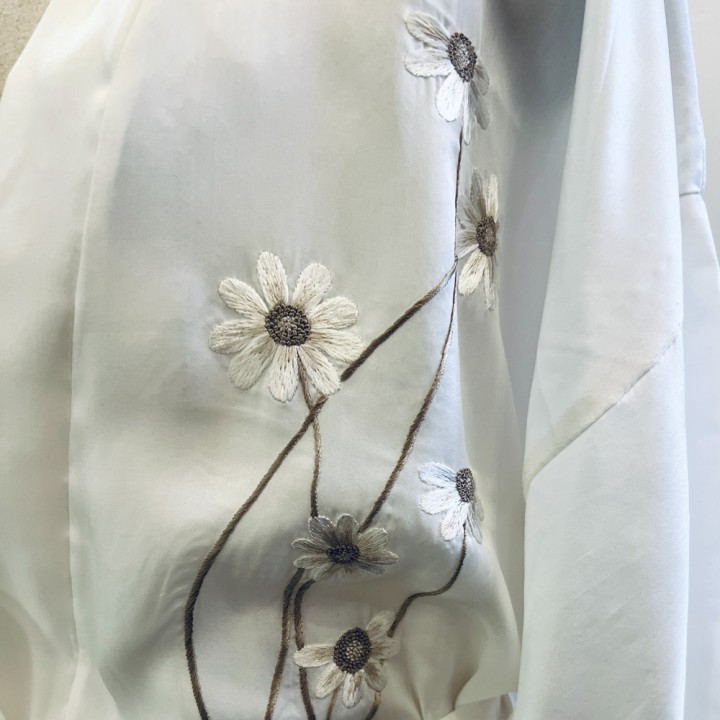
What should you check before buying hand embroidery as a luxury Vietnamese gift?
Before buying hand embroidery as a luxury Vietnamese gift, verify 5 proofs: handwork, provenance, materials, cultural story, and aftercare before asking “can you machine wash hand embroidery?”
- Check handwork: true hand embroidery should show fine stitch direction, layered threadwork, slight hand-made irregularity, and no machine-perfect repetition.
- Check provenance: ask who made it, where it was made, and whether the piece links to a workshop, craft village, or heritage retailer such as Tan My Design, which states 4 generations since 1969.
- Check materials: silk, cotton, dense stitching, fabric sheen, and clean finishing matter more than generic “luxury” wording.
- Check cultural meaning: motifs such as lotus, birds, Hanoi scenery, or Vietnamese landscapes should come with a clear story, not decorative claims only.
- Check aftercare: delicate embroidery should include care guidance, storage advice, and washing limits; absence of care instructions is a red flag.
A piece may still be beautiful but weak as a VIP gift if the seller cannot prove origin, process, or care.
For a high-stakes gift, proof turns beauty into confidence.
I would hesitate if the piece looked perfect but came with no maker name, no story card, and no answer on washing. That silence feels risky: the gift may sit in a boardroom or a partner’s home, but I would still worry it was just a polished souvenir. Provenance (the product’s traceable origin) gives me something dignified to say when handing it over. Care guidance also matters because nobody wants a delicate gift to become a maintenance problem.
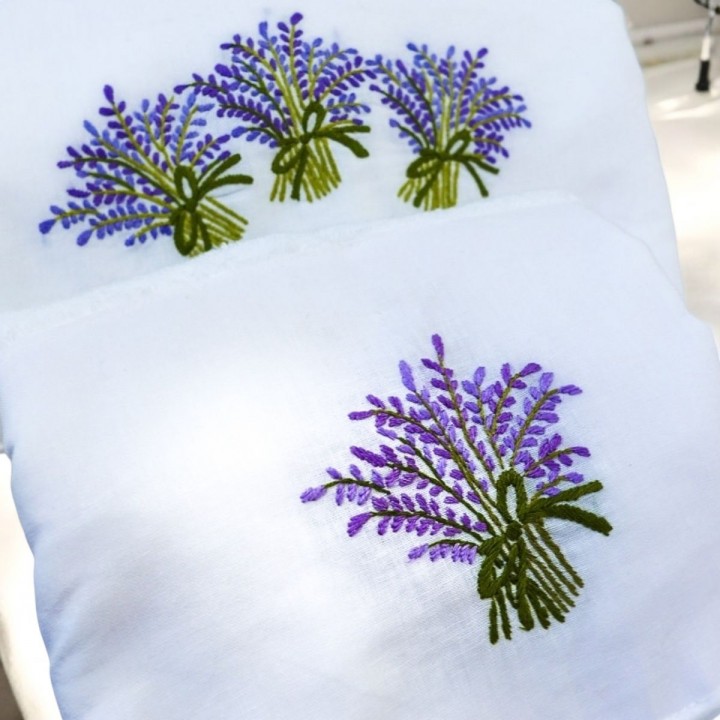
How can you preserve hand embroidery after washing so it still feels worthy of a VIP gift?
Preserve hand embroidery after washing by drying it fully, storing it dark, and keeping humidity near 45–55% RH, not 70%+ where mould risk rises.
- Dry completely before storage. A clean textile must be fully dry before it goes into a box, drawer, or gift wrapping; trapped moisture can restart mould even after careful washing.
- Dry flat and avoid compression. Flat support protects the ground fabric and raised stitches from stretching, sharp folds, and crushed texture; if folding is unavoidable, pad the crease with acid-free tissue or muslin.
- Store dark, cool, and breathable. Light damage is cumulative and irreversible, so a VIP keepsake should rest in dark storage, not near display lighting or a sunny cabinet.
- Use archival wrapping, not plastic bags. Acid-free tissue, muslin, Tyvek, or acid-free boxes reduce abrasion and moisture risk; plastic can attract dust and raise humidity inside the package.
- Inspect before gifting. Check for musty odor, spotting, dust, loose threads, or flattened stitches before presenting it.
If the embroidery includes silk, metallic thread, antique dyes, or unknown fiber content, do not treat “can you machine wash hand embroidery” as a routine laundry question; use minimal handling and specialist care.
A gift feels prestigious when the care ritual matches the craft: no damp smell, no hard fold line, no flattened stitch - just a textile that still looks intentionally preserved.
A fair challenge to this advice is that many modern embroidered items do survive a gentle machine wash. That is true. The point is that “survived” and “still worthy of a meaningful gift” are different standards. When authenticity, craftsmanship, and presentation matter, caution protects what replacement cannot restore. If you're looking for hand embroidery created to honor Vietnamese heritage and deserve a place among life's most important gifts, explore the curated collections at Tân Mỹ Design before making your next gift choice.
FAQ
Can you machine wash hand embroidery?
Yes, but only if the fabric, thread, and care label allow it. Use cold water, a gentle cycle, low spin, and a mesh laundry bag. For luxury hand embroidery, hand washing is safer.
Is hand washing better for hand-embroidered gifts?
Yes. Hand washing reduces friction, snagging, color bleeding, and fabric distortion. For premium Vietnamese hand-embroidered gifts, it protects both the textile and the meaning of the gift.
What should I avoid when washing hand embroidery?
Avoid hot water, bleach, harsh detergent, high spin, tumble drying, and wringing. These can loosen stitches, fade thread, or distort the embroidered surface.
When should hand embroidery never go in the washing machine?
Do not machine wash silk, vintage embroidery, loose stitches, beads, raffia, leather details, or non-colorfast thread. These pieces need gentle hand care or professional cleaning.
How should I dry hand embroidery after washing?
Lay it flat on a clean towel and air dry. Do not twist, squeeze, or tumble dry. Heat and pressure can damage the stitches and change the shape of the fabric.
Other articles

Vietnamese Silk Scarf Motifs: Meanings & Gift Choices
Square vs Long Silk Scarf: Which Makes a Better Gift?
Hand-Embroidered vs Printed Silk Scarves: Which to Gift?
_cr_720x720_cr_336x264.jpg)
Meaningful Personalized Gifts: What Makes Them Feel Truly Special




Add: 61 Hang Gai St., Hoan Kiem Dist., Hanoi, Vietnam
Hotline: +84 936631368
Email: info@tanmydesign.com