
.png)
Hand vs Machine Embroidery: What to Check Before Buying
A piece described as handmade should give you a clear basis for understanding how its embroidery was actually produced. For a high-end Vietnamese gift, especially one chosen for a partner, VIP, or representative occasion, appearance alone may not settle the question of authenticity. The useful distinction is to identify which parts were worked by hand, whether any stages involved a machine, and what evidence supports those claims before you buy.
What Does “Hand-Embroidered” Actually Mean?
“Hand-embroidered” should describe the decorative stitching itself: the motif is formed manually, rather than produced by an embroidery machine. It does not automatically mean the fabric, hemming, assembly, or every other production stage was handmade.
The V&A describes hand embroidery as “hand-worked” embroidery, while The Met documents luxury garments that deliberately combine hand embroidery, machine sewing, and hand finishing.
This distinction matters because broader craft language proves less. UNESCO’s definition of an artisanal product explicitly allows hand tools and mechanical means, and the Crafts Council notes that professional embroiderers may sew both by hand and by machine. Putting those definitions together produces a useful verification rule: “artisan-made” identifies substantial artisan involvement; only process-specific wording establishes how the embroidery itself was executed.
For a high-value gift, ask the seller to state in writing which operation was manual: the embroidery, fabric production, garment assembly, or finishing. Request process photographs, video, or workshop documentation showing the embroidery being made not merely the finished piece. A machine-sewn hem or commercially woven base does not invalidate genuinely hand-worked embroidery; undisclosed machine-made decorative stitching does. FTC guidance reinforces the underlying principle that textile marketing claims must be truthful and substantiated.
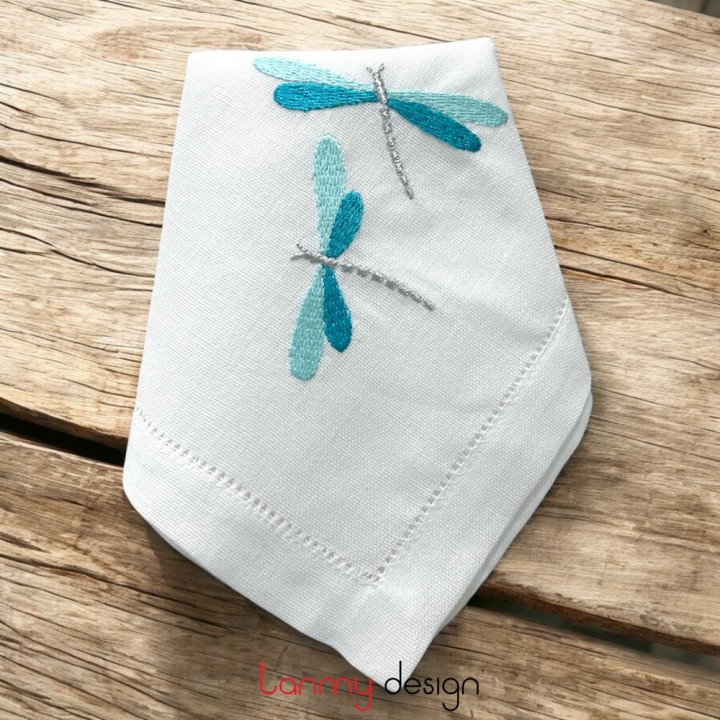
Check the Stitching for Signs of Hand or Machine Work
Do not judge embroidery by “perfect” versus “imperfect” stitches. For a high-value gift, inspect the stitch structure first: machine-specific mechanics carry more weight than visual regularity, which skilled handwork can also achieve.
- Turn the piece over. In conventional machine embroidery, the face thread interacts with a separate bobbin thread; Brother’s technical guidance shows this two-thread tension relationship on the reverse. A consistent bobbin-based structure across the design is therefore much stronger machine evidence than a simply neat back.
- Look for backing as supporting evidence, not proof. Modern machine embroidery commonly uses stabilizer attached to the wrong side and held within an embroidery frame. Its presence increases machine confidence, but cannot establish the production method by itself.
- Do not reject handwork because stitches look unusually even. The V&A documents hand-worked counted-thread techniques that intentionally produce regular, repeated patterns.
Putting these findings together creates a useful buying hierarchy: structural evidence such as a consistent bobbin system should outrank symmetry, neatness, or small irregularities when evaluating a “hand-embroidered” claim.
For an important gift, ask the seller to identify which sections are hand embroidered, show the reverse, and explain the technique. If clear machine structure appears in an area claimed to be entirely hand stitched, request clarification before buying; absence of that structure alone does not prove handwork.
_cr_720x720.jpg)
Ask for Proof That Connects the Handmade Claim to the Piece
For a high-value embroidered gift, do not treat “handmade” as proof by itself: ask for evidence that shows both the manual embroidery process and a clear link between that process and the exact piece you are buying.
The key distinction is a two-link proof test. The FTC requires objective product claims to have a reasonable evidentiary basis, while ISO 22095 says traceability can strengthen claim reliability but cannot, by itself, prove how a product was made. Put together, these principles mean that process evidence without product identity and product records without process evidence leave different authenticity gaps.
- Identify the piece. Ask for an SKU, order number, batch reference, tag, or another identifier visible in records or process images.
- Identify the handwork precisely. Request confirmation of which motifs or components were embroidered by hand and which, if any, involved machine work.
- Match process to product. Look for dated photographs or video showing recognizable motifs, fabric marks, thread colours, or other features that also appear on the finished item.
- Inspect construction evidence. Front-and-reverse close-ups can corroborate the stated technique, but neatness or irregularity alone cannot authenticate hand embroidery.
- Do not rely on “handmade” terminology alone. Etsy, for example, classifies some products made with computerized tools within its broader seller-made framework, illustrating why the exact operation matters.
For a VIP gift, accept an “entirely hand-embroidered” claim only when both links manual process and piece identity are documented; otherwise, ask the seller to narrow the claim to the hand-worked elements actually evidenced.
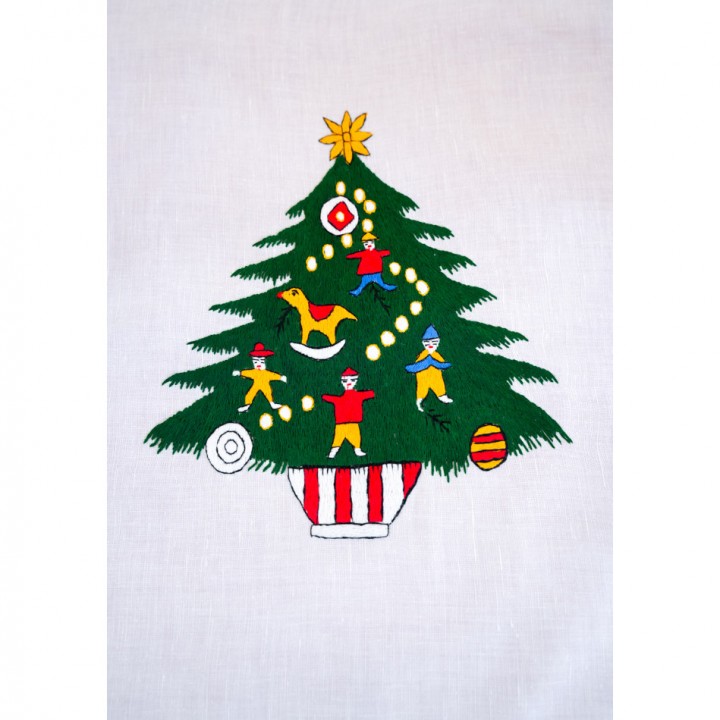
What If the Signs and the Seller’s Claim Do Not Match?
When the stitching, production records, and seller’s description disagree, do not force the piece into “hand” or “machine.” Treat the mismatch as an evidence-resolution problem and use the narrowest description that independent evidence can support.
The key distinction is convergence, not confidence in any single clue. FTC guidance treats an objective marketing statement as a claim requiring a reasonable evidentiary basis, while the ASA’s Moncrief ruling shows that even genuine hand-finishing did not substantiate the broader statement that “each item” was handmade. Physical inspection adds a separate evidence channel: bobbin thread and systematic carried threads can indicate machine embroidery, although individual visual clues are not universally decisive.
| What you find | Defensible conclusion | What to request |
|---|---|---|
| Handwork signs + item-linked hand-production records | Hand-worked | Maker/workshop record |
| Machine signs + machine-production records | Machine-produced | Production specification |
| Clearly different methods in different areas | Mixed-method | Which sections were handmade |
| Seller says “handmade,” but physical evidence conflicts | Handmade claim unsupported/contradicted | Item-specific proof |
| Records and physical examination disagree or remain ambiguous | Method unverified | Further records or qualified examination |
Evidence A (claim must be substantiated) + Evidence B (physical/process evidence may contradict its scope) → the seller’s wording cannot break a tie. For a prestigious gift, buy on the premium “hand-embroidered” premise only when the claim, the actual stitching, and traceable production evidence materially agree; otherwise ask the seller to qualify the method before purchase.

Decide Whether the Hand-Embroidery Claim Is Strong Enough to Trust
Treat “hand-embroidered” as credible only when the seller defines exactly what was hand-worked and two evidence channels agree: the textile itself is consistent with that process, and records connect that process to the specific piece or batch.
| What to check | Strong enough to trust | Reason to ask or decline |
|---|---|---|
| Scope of the claim | Seller states whether the entire visible embroidery, selected motifs, or only finishing was done by hand. | “Handmade” is used without distinguishing design, embroidery, assembly, or machine-assisted stages. |
| Physical examination | Front and reverse show stitch structure consistent with the stated technique; ideally examined closely or by a textile specialist for a high-value piece. | Only neatness, irregularity, or appearance is offered as proof. Textile conservation practice shows stitch structure is technique-dependent and detailed examination can require specialist judgment. |
| Process trail | Dated photos/video, maker or workshop identity, and an item- or batch-linked production record explain how the embroidery was executed. | Generic artisan photographs, testimonials, or an unverifiable certificate cannot connect the claim to this piece. Craftmark’s model likewise authenticates the craft process and emphasizes traceability to the producer. |
| Consistency | Physical evidence and process documentation explain each other without material contradiction. | The claimed level of handwork is stronger than the evidence supplied. FTC substantiation principles require a reasonable basis for the objective claim actually conveyed. |
The useful distinction is therefore not “does it look handmade?” but “does the evidence support the exact level of handwork claimed?” For a prestigious gift, buy on the stronger claim only when both channels align; otherwise request item-specific proof or choose a piece with a narrower, verifiable description.
The right choice is not simply the piece that looks refined, but the one whose making can be explained with enough clarity for you to judge what “handmade” means in that specific product. Before selecting an embroidered gift, ask for a clear account of the production process and supporting proof, including which elements were completed by hand and which, if any, involved machinery. That verification helps keep craftsmanship and provenance central to the decision.
Other articles

Vietnamese Silk Scarf Motifs: Meanings & Gift Choices
Square vs Long Silk Scarf: Which Makes a Better Gift?
Hand-Embroidered vs Printed Silk Scarves: Which to Gift?
_cr_720x720_cr_336x264.jpg)
Meaningful Personalized Gifts: What Makes Them Feel Truly Special




Add: 61 Hang Gai St., Hoan Kiem Dist., Hanoi, Vietnam
Hotline: +84 936631368
Email: info@tanmydesign.com