

Tablecloth, Runner or Placemats? Choose by Table & Occasion
Choose a tablecloth for full coverage, a table runner to highlight the center of your table, or placemats to define individual dining spaces. The right choice depends on your table’s shape, the occasion, and how much of its surface you want to reveal. For an elegant setting, consider how each piece complements your table before choosing its fabric, dimensions, and design.
Tablecloth vs table runner vs placemats: What's the difference?
A tablecloth covers the entire table, a table runner creates a decorative strip across its surface, and placemats define individual dining spaces. The main difference lies in coverage and placement, although all three can contribute to both protection and styling.
| Feature | Tablecloth | Table runner | Placemats |
|---|---|---|---|
| Placement | Covers the tabletop and drapes over its edges | Usually runs lengthwise down the center | Sits beneath each diner's place setting |
| Coverage | Entire tabletop | Narrow central section | Individual dining areas |
| Main purpose | Overall protection and a unified appearance | Decorative accent and localized protection | Defines place settings and protects dining areas |
| Best suited for | Formal dinners, celebrations, or full-table coverage | Decorative arrangements that showcase the tabletop | Everyday dining and individual place settings |
| Typical sizes | Varies by table dimensions and desired drop | Often 13 inches wide and 72–120 inches long | Often 13 × 18 inches for rectangular designs |
These linens can also work together. A tablecloth creates the foundation, a runner adds visual interest, and placemats distinguish individual settings.
These are typical uses, not fixed rules. Dimensions, layering, and protective performance depend on the design, material, and arrangement.
For choosing: Select a tablecloth for full coverage, a runner to highlight the tabletop, or placemats for individual dining spaces.
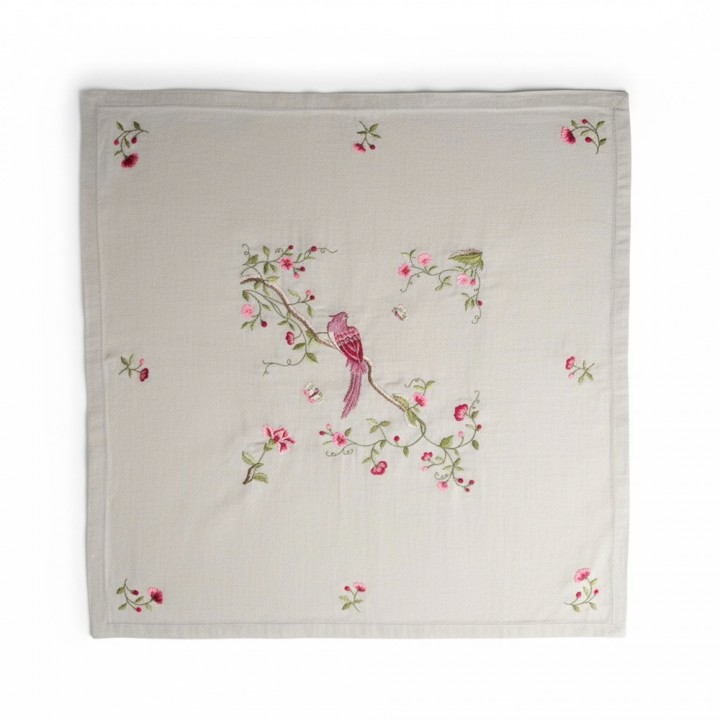
Which table linen works best for your table shape and size?
A tablecloth works best for full coverage, a table runner for a decorative centerpiece, and placemats for individual settings. The right choice depends on your table's shape, dimensions, desired fabric overhang, and available dining space.
For rectangular or square tables, a tablecloth provides a coordinated look. Calculate its dimensions by adding twice your desired drop to the table's length and width. A 160 × 90 cm table with a 20 cm drop, for example, needs a 200 × 130 cm tablecloth. Alternatively, a runner adds visual interest while leaving the tabletop exposed. Placemats suit everyday dining when each setting has sufficient space.
For round tables, choose a circular tablecloth with a diameter equal to the tabletop diameter plus twice the desired drop. Round placemats can complement the curved edges, while a runner placed across the center works best when it leaves adequate room for tableware.
For oval tables, an oval tablecloth generally creates a more even drape. A rectangular cloth can also work, but its corners may hang lower. A lengthwise runner offers an alternative when you want to showcase the tabletop.
For extendable or unusually shaped tables, standard sizing recommendations may be unreliable. Measure the table in its intended configuration and check plate, glassware, and seating clearance before choosing.
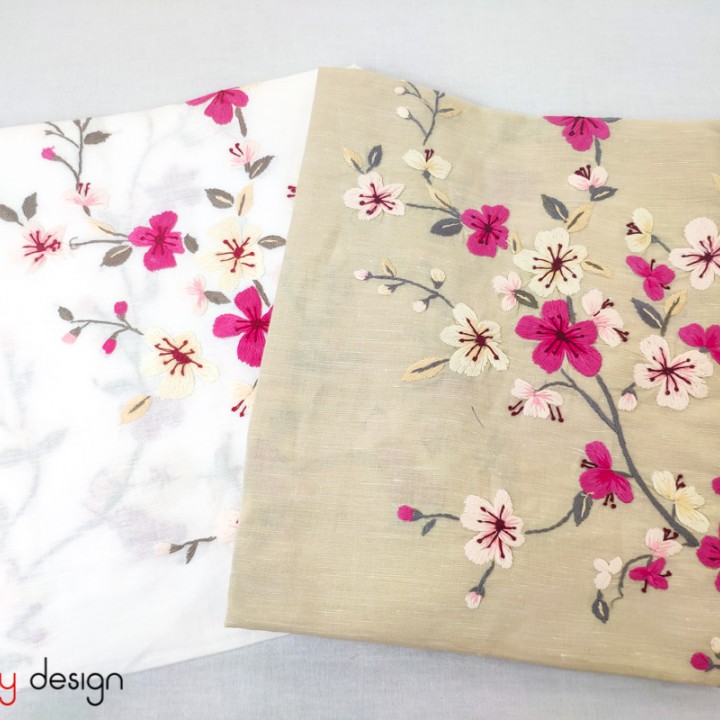
Tablecloth, runner or placemats: Which is best for each occasion?
Choose a tablecloth for full coverage, a table runner to highlight the center, or placemats to define individual dining spaces. The best choice depends on the occasion, desired protection, and how much of the tabletop you want visible.
| Occasion | Best starting choice | Why it works |
|---|---|---|
| Everyday meals | Placemats | Protect individual eating areas, simplify setup, and allow easy replacement or cleaning. |
| Casual gatherings | Placemats + optional runner | Define each guest’s space while creating a coordinated centerpiece. |
| Formal dinners | Tablecloth + optional runner | Create a unified, polished foundation; add a runner for decorative emphasis. |
| Decorative displays | Table runner | Frame flowers, candles, or decorative objects while keeping the tabletop visible. |
These are practical recommendations, not strict etiquette rules. Emily Post's formal place-setting guidance recognizes elegant placemats as suitable for formal dining. Likewise, tablecloths can complement relaxed family meals, while runners work for everyday decoration.
Can you combine all three? Yes. A tablecloth creates the foundation, a runner draws attention to the center, and placemats define individual settings. However, layering is optional, particularly when the table's natural texture or craftsmanship deserves attention.
For the most balanced arrangement, prioritize the function you need most: overall coverage, centerpiece emphasis, or protection at each seat. Then select materials, colors, and patterns that suit the occasion.
How do coverage, table protection, style and care affect your choice?
Choose a tablecloth for full-table coverage, a table runner for a decorative central accent, or placemats for individual place settings. For protection and easy maintenance, however, the material and construction matter more than the format alone.
Coverage and style. A tablecloth creates a unified appearance, conceals most of the tabletop, and adds an elegant drape. A runner highlights the table's center while showcasing the surface beneath. Placemats frame individual settings, making them suitable for everyday meals or layered arrangements.
Surface protection. Greater coverage does not guarantee better protection. Ordinary woven fabrics can absorb spills, allowing moisture to reach the tabletop. Thin placemats may offer limited protection against scratches or liquids, while coated or backed designs can provide different levels of resistance. None should be assumed safe beneath hot cookware without verified heat-resistance specifications. Use trivets and coasters for additional protection.
Cleaning and maintenance. Cotton and linen can wrinkle and absorb stains, while polyester generally dries faster and resists creasing. Coated or cork-backed placemats may require wiping rather than machine washing. Always follow the finished product's care instructions, particularly for embroidered or embellished textiles.
Practical choice: Select a tablecloth for formal dining or complete visual coverage, a runner to showcase a beautiful tabletop, and placemats for defined individual settings. Before purchasing, check fiber composition, backing, finishes, and care requirements rather than assuming protection from appearance alone.
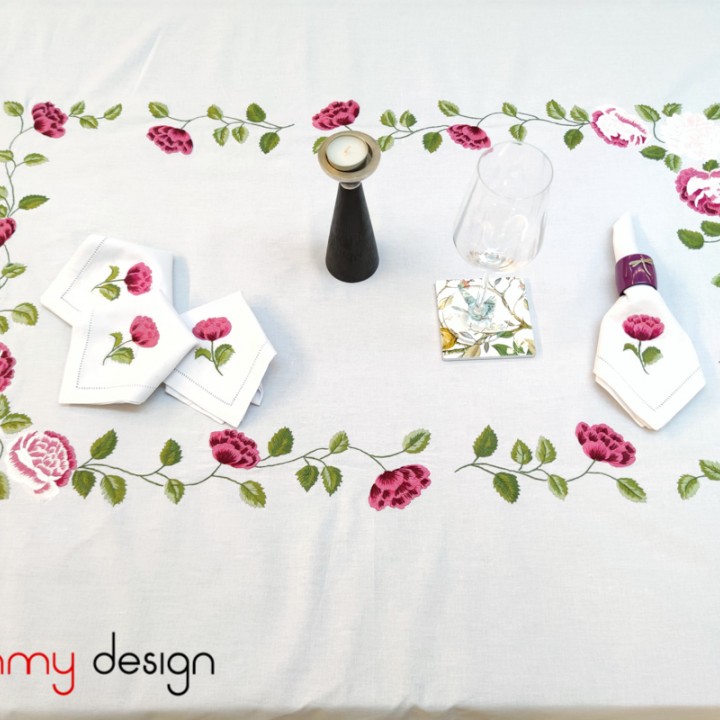
Can you use a table runner and placemats together?
Yes, you can use a table runner and placemats together, with or without a tablecloth. The key is to keep the runner centered, give each guest enough dining space, and coordinate colors and patterns without overcrowding the table.
There are four practical ways to arrange these table linens:
- Runner only: Center the runner lengthwise, leaving the surrounding tabletop visible for place settings.
- Runner + placemats: Position a placemat in front of each chair, keeping it clear of the central runner.
- Tablecloth + runner: Lay the tablecloth first, then center the runner on top for a layered appearance.
- Tablecloth + runner + placemats: Combine all three, using a neutral base and one dominant pattern to maintain visual balance.
For comfortable dining, allow approximately 60 cm (24 inches) of table length per guest. A runner around one-third of the table's width is a useful starting proportion. On a 90 cm-wide table, for example, consider a runner approximately 30 cm wide. If you prefer a draped look, allow roughly 15–30 cm (6–12 inches) of overhang at each end.
More layers do not necessarily create a more elegant table. If placemats overlap the runner excessively, patterns compete, or tableware feels crowded, simplify the arrangement.
The practical rule: Choose a runner to highlight the table's center, placemats to define individual dining spaces, and a tablecloth when you want a full fabric foundation. Combine them only when each layer serves a clear purpose.
What should you check before buying table linens?
Before buying a tablecloth, table runner, or placemats, check the finished dimensions, fabric composition, care instructions, quantity, and how each piece will fit your table setting. A beautiful design is only a good choice if it suits your table and everyday needs.
- Tablecloth dimensions: Measure your table's length and width, or diameter for a round table. Add twice your desired drop to calculate the required fabric dimensions. For example, a 60 × 36-inch table with an 8-inch drop needs a 76 × 52-inch tablecloth.
- Runner proportions: Check the finished width and length. A runner can lie entirely on the tabletop or extend approximately 6–12 inches beyond each end, depending on your preferred arrangement.
- Placemat quantity and placement: Confirm individual dimensions and whether the price includes one placemat or a complete set. Ensure each mat accommodates your place setting without crowding the runner.
- Fabric composition: Look for specific fiber percentages, such as 100% cotton or a cotton-polyester blend. A linen-look fabric is not necessarily made from flax linen.
- Care requirements: Check washing, drying, ironing, and shrinkage guidance, particularly for embroidered fabrics and decorative finishes.
- Craftsmanship and origin: If purchasing handcrafted Vietnamese table linens, look for product-specific information about embroidery techniques, materials, and production origin. Decorative photographs or general heritage claims alone cannot verify hand embroidery.
Before ordering, ask the seller to clarify any missing measurements, material details, or care instructions. A well-documented product makes it easier to choose table linens that combine elegant design with practical suitability.
For everyday dining, placemats offer a practical starting point, while a runner lets a beautiful tabletop remain part of the setting. A tablecloth creates a more unified look for formal occasions, and thoughtfully coordinated layers can add depth without overcrowding the table. Before choosing, measure your table and check the fabric care instructions. At Tân Mỹ Design, explore table linens that complement your personal style and the atmosphere you wish to create.
Other articles
How to Choose Table Linen Colors for Your Dining Room
How to Choose Tablecloth Size: Measure, Calculate & Fit

Vietnamese Silk Scarf Motifs: Meanings & Gift Choices
Square vs Long Silk Scarf: Which Makes a Better Gift?




Add: 61 Hang Gai St., Hoan Kiem Dist., Hanoi, Vietnam
Hotline: +84 936631368
Email: info@tanmydesign.com