

How to Style Embroidered Silk Scarves for Office Dress Codes
To style hand-embroidered silk scarves for work, let your office dress code guide the knot, color, and placement of the embroidery. A neatly folded scarf with a subtle motif complements formal tailoring, while business-casual and creative workplaces allow more expressive styling. The key is to showcase the embroidery without overwhelming your outfit or placing delicate stitches where collars and accessories may cause friction.
Which Silk Scarf Styles Suit Different Office Dress Codes?
Hand-embroidered silk scarves can complement almost any office wardrobe when their size, knot, and embroidery suit the workplace’s level of formality. The key is to balance personal expression with professional polish, allowing delicate craftsmanship to enhance rather than overwhelm an outfit.
| Office dress code | Recommended scarf style | Ideal outfit pairing | Styling considerations |
|---|---|---|---|
| Formal business | Slim collar fold or small, flat neck knot | Tailored blazer, silk blouse, sheath dress | Choose subtle embroidery, coordinated colors, and neatly tucked ends. |
| Business casual | Compact front knot, loose collarbone tie, or bag-handle accent | Knit top, tailored trousers, midi dress | Let embroidered details provide one refined focal point. |
| Creative office | Bandana-style tie, soft shoulder drape, or elegant pussy-bow | Oversized blazer, monochrome separates, flowing trousers | Explore expressive motifs and richer colors while keeping other accessories understated. |
For a timeless professional look, consider a hand-embroidered silk scarf featuring delicate floral motifs. Its craftsmanship introduces a subtle connection to Vietnamese textile heritage without sacrificing contemporary elegance.
One important exception: workplace policies and safety requirements take precedence over styling. Loose scarves may be unsuitable around machinery or protective equipment.
When uncertain, choose a small, securely tied scarf that adds quiet distinction to your working wardrobe.
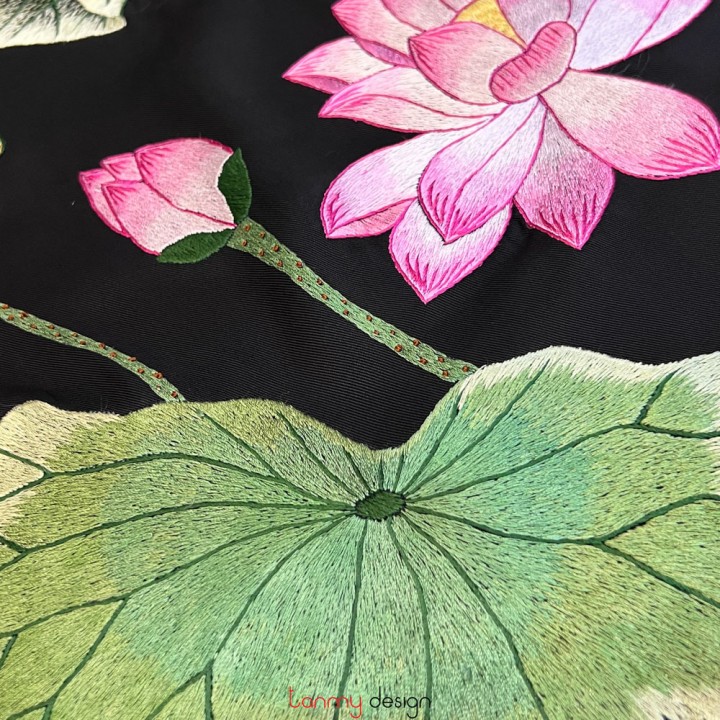
How Should You Prepare a Hand-Embroidered Silk Scarf Before Styling?
Before styling a hand-embroidered silk scarf for work, inspect its embroidery, identify the motif placement, and fold the fabric gently. These simple preparations help preserve its delicate craftsmanship while creating a polished, office-appropriate look.
- Lay the scarf flat and inspect its condition. Place it on a clean, dry surface. Check for loose threads, snagged stitches, stains, or existing creases. Handle the silk with clean, dry hands.
- Identify the embroidered motifs. Locate floral patterns, decorative borders, or embroidered ends. Decide which details should remain visible against your blouse, blazer, or dress. Tân Mỹ Design's styling guidance recommends arranging the scarf according to its embroidery placement.
- Choose a fold that suits the scarf's dimensions. A narrow 25 × 200 cm silk scarf lends itself to a slender drape or loose knot. A wider 40 × 200 cm design allows a fuller, softer arrangement. Both dimensions appear in Tân Mỹ Design's hand-embroidered silk scarf collection.
- Fold gently without compressing the embroidery. Use broad, relaxed folds rather than tight rolls or sharp creases across raised stitching. Keep embroidered sections away from tightly secured knots.
- Check the final arrangement in a mirror. Ensure the motifs face outward, the fabric falls naturally, and the scarf complements your professional outfit without concealing its handcrafted details.
The finishing principle: Let the embroidery guide the styling not the knot.
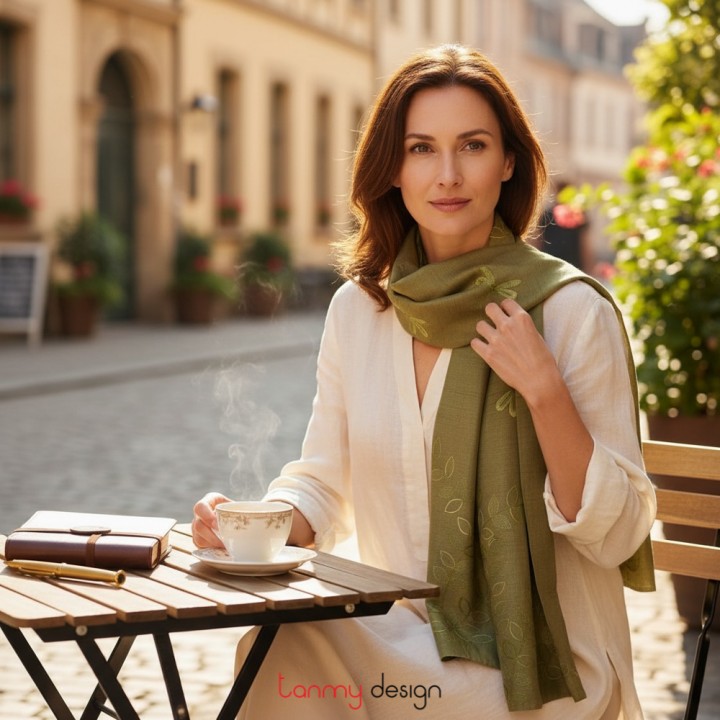
How to Tie and Drape an Embroidered Silk Scarf for Work
For a polished office look, three simple styling methods work particularly well with hand-embroidered silk scarves: a neat side knot, a soft front drape, and a relaxed single loop. Each creates a different silhouette while allowing the embroidery to remain visible.
- Neat side knot for tailored office attire. Place the scarf around your neck with both ends hanging evenly. Cross one end over the other, bring it upward through the neck opening, and gently move the knot toward your collarbone. Keep the embroidered motif facing outward. This variation of Eton's Overhand knot pairs elegantly with button-down shirts and structured blazers.
- Soft front drape for understated sophistication. Rest the scarf behind your neck, allowing both ends to fall naturally over your blouse or beneath an open jacket. Smooth the fabric without twisting or tightening it. This knot-free drape keeps delicate embroidery visible while minimizing pressure on raised stitches.
- Relaxed single loop for smart-casual workdays. Begin with one end longer, wrap it loosely around your neck once, and bring both ends forward. Adjust the folds so the embroidery remains visible.
For embroidered silk, gentle handling matters more than knot complexity. A longer scarf offers more styling flexibility; avoid tightening knots directly over raised embroidery, and always follow the maker's fabric-care instructions.
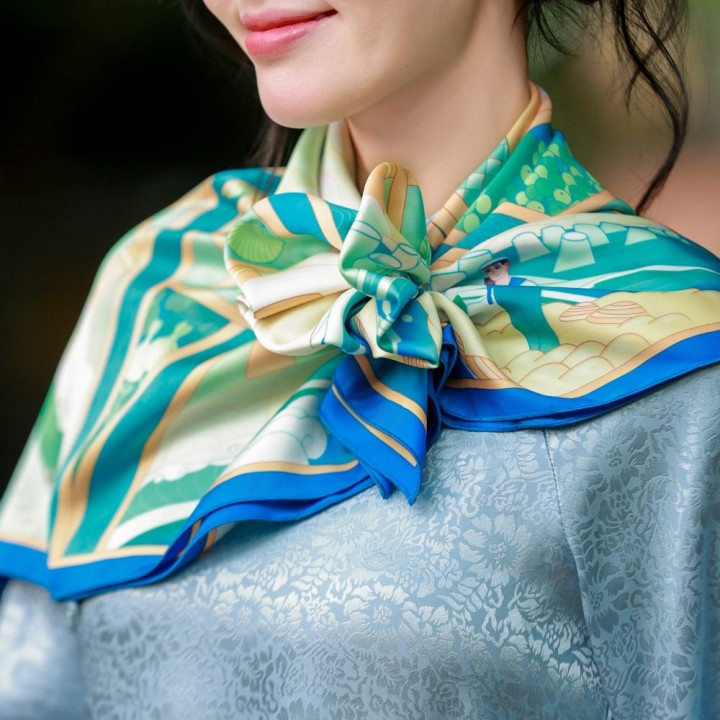
How to Match Embroidered Silk Scarves with Office Outfits
To style hand-embroidered silk scarves for work, match the scarf’s placement, embroidery detail, and color to the structure of your outfit. A carefully chosen scarf can introduce Vietnamese craftsmanship into professional attire without overwhelming its clean lines.
| Office outfit | Recommended scarf styling | Color and embroidery pairing |
|---|---|---|
| Tailored blazer | Compact neck knot or narrow vertical drape inside the lapels | Ivory or softly patterned silk against navy, black, or charcoal tailoring |
| Collared shirt | Fold into a slim band and tuck beneath the collar; finish with a small knot | Delicate floral embroidery adds character to a crisp white or pale-blue shirt |
| Silk blouse | Loose knot or gentle drape at the collarbone | Echo one blouse color in the embroidered threads for subtle harmony |
| Fine-knit top | Small, flat knot or relaxed neck wrap | Choose restrained embroidery against a smooth, solid-colored knit |
| Office dress | Short neck drape, collarbone knot, or waist tie for suitable scarf lengths | A patterned scarf complements a plain dress; understated motifs balance detailed garments |
Embroidery placement matters as much as color. A tightly folded scarf may conceal its most intricate stitching, while an open drape reveals more of the artisan’s work.
For inspiration, explore Tân Mỹ Design’s hand-embroidered camellia silk scarf, measuring 55 × 200 cm. Its elongated format offers possibilities for soft vertical styling, allowing handcrafted detail to become a refined accent to contemporary office wear.
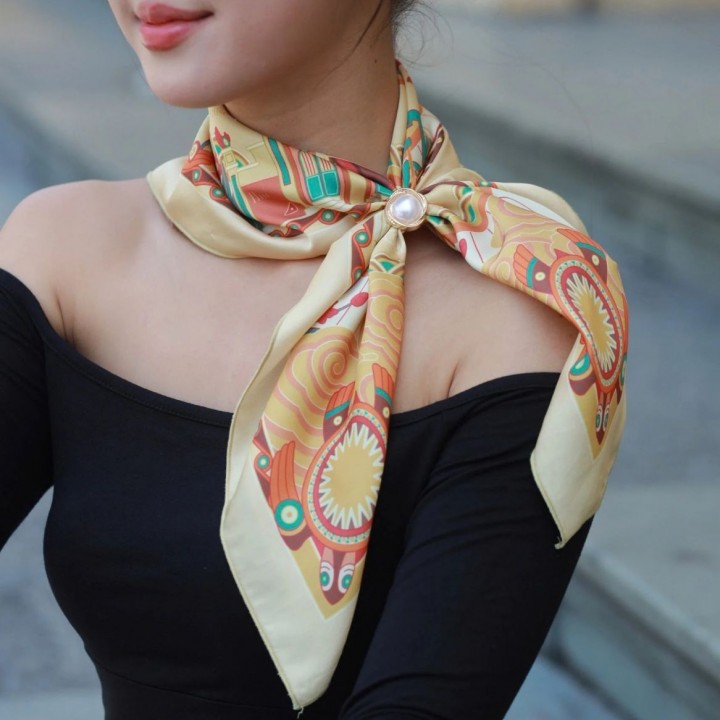
How to Keep Your Embroidered Scarf Neat and Comfortable Throughout the Workday
A hand-embroidered silk scarf should feel comfortable, stay securely in place, and reveal its delicate craftsmanship without interfering with your daily activities. A few thoughtful adjustments can preserve both its elegance and intricate Vietnamese embroidery.
- Choose a comfortable, secure knot. Opt for a loose neck knot or a neatly folded front drape. Hermès’ scarf styling guide demonstrates different ways to arrange silk while keeping its design visible.
- Test your movement before leaving. Turn your head, sit, and reach toward your keyboard. The scarf should neither tighten around your neck nor obstruct your work.
- Protect delicate embroidery from friction. Keep embroidered areas away from rough collars, zippers, jewelry, and bag straps that could catch the threads.
- Keep the embroidered motif visible. Adjust the folds so the hand-stitched details complement your blouse or blazer rather than disappearing beneath the collar.
- Avoid direct contact with perfume and cosmetics. Apply fragrance and skincare before dressing to reduce the risk of staining delicate silk.
- Handle the scarf gently after work. Untie it without pulling the embroidery. Store fragile or embellished pieces flat, clean, and dry rather than tightly folded or compressed.
- Follow the maker’s care instructions. Tân Mỹ Design’s silk-care guidance emphasizes that cleaning and pressing depend on the finished scarf’s construction, embroidery, and care label.
For an elegant office appearance, the simplest arrangement often allows the finest handwork to speak for itself.
A hand-embroidered silk scarf works best in a professional wardrobe when the craftsmanship remains visible but understated. For formal meetings, choose a compact neck knot with subtle embroidery; for more relaxed offices, consider a softer drape or a carefully placed accent. Keep raised stitching away from friction and avoid tightly folding embellished areas. When exploring scarves at Tân Mỹ Design, prioritize a design whose embroidery, silk texture, and proportions suit how you intend to wear it.
Other articles
Why Choose Mulberry Silk for Hand-Embroidered Scarves?
Are Hand-Embroidered Silk Scarves Worth the Price?
Where to Buy Authentic Hand-Embroidered Silk Scarves: A Trusted Buying Guide
How to Choose Hand-Embroidered Silk Scarves as Gifts




Add: 61 Hang Gai St., Hoan Kiem Dist., Hanoi, Vietnam
Hotline: +84 936631368
Email: info@tanmydesign.com