
.png)
How to Identify Real Silk: 7 Tests That Actually Help
Real silk deserves more than a quick judgment based on shine, softness, or an elegant label especially when the piece is meant to become a meaningful gift. Knowing how to identify real silk gives you a more grounded way to assess what you are buying and whether it carries the authenticity and refinement the occasion calls for. Seven practical tests can help you examine silk more carefully, so appearance alone does not have to carry the weight of an important gifting decision.
Know What the Tests Can and Can not Prove
The safest way to identify real silk is not to count how many tests it “passes,” but to ask what each test can actually establish: provenance supports a claim, sensory checks screen for plausibility, and fiber analysis addresses material identity.
This distinction matters because the tests answer different questions. FTC guidance shows that a fiber-content label is a composition declaration and even a garment containing 97% silk plus intentionally added 3% polyester cannot be labeled “100% silk.” Meanwhile, the Canadian Conservation Institute states that neither burn testing nor microscopy is conclusive alone; blends can complicate burn behavior, and representative sampling may require examining both warp and weft.
Putting those findings together creates a practical three-level evidence ladder: documentation tells you what the textile is represented to be; lustre, hand, drape, and a burn response tell you whether silk is plausible; microscopy combined with chemical or instrumental analysis provides substantially stronger evidence about the sampled fibers. Modern forensic guidance likewise uses multiple analytical techniques, while infrared spectroscopy can distinguish silk from materials such as wool or synthetic polyamide when spectra and samples are suitable.
Even laboratory confirmation of silk in one thread does not prove that every yarn, lining, trim, or component is pure silk.
For an important luxury gift, therefore, treat home tests as screening not authentication and prioritize traceable composition claims plus representative fiber evidence when authenticity materially affects the purchase.
Test 1: Check the Fiber-Content Label and Product Provenance
For a high-value silk gift, the strongest first check is not whether the word “silk” appears, but whether a precise fiber-content claim is consistently tied to the same product, component, maker, and provenance.
- Look for an explicit percentage. “100% silk” carries far more evidentiary weight than “silky,” “silk touch,” or even “silk” alone. U.S. rules require covered textiles to disclose generic fiber names and percentages by weight; EU rules likewise require constituent fibers and percentages, and reserve “100%,” “pure,” or “all” for products composed exclusively of one fiber, subject to narrow allowances.
- Then test the provenance chain. The FTC also requires manufacturer/marketer identification and country of processing or manufacture. Putting this beside the EU composition rules produces a useful distinction: composition specificity + item-level traceability is stronger evidence than silk wording alone. A “100% silk” sewn-in label that agrees with the invoice or manufacturer documentation therefore deserves higher confidence than an unsupported hang-tag claim.
- Treat consistency as confidence, not proof. Professional fiber identification uses physical, chemical, and microscopic methods; AATCC TM20 separately defines laboratory techniques for identifying fiber type. If labels, invoices, or product descriptions conflict or “100% silk” applies only to the shell classify the fiber content as unverified, not automatically counterfeit. For a prestigious gift, proceed only when the percentage, component, and provenance records agree; otherwise ask for clarification or independent verification.
Test 2: Move the Fabric Under Light and Examine Its Luster
Tilt the fabric slowly under a single light source and watch how the highlight moves: real silk often produces a softer, broader sheen, but the useful clue is the behavior of the reflection, not simply whether the fabric looks shiny.
Natural silk’s non-circular fibroin filaments and irregular yarn geometry spread reflected light across a wider range of angles. Controlled measurements found silk reflection curves to be broader and less dependent on one precise viewing angle, while comparable polyester often concentrated more light near the specular angle, creating a sharper, more glittering effect.
The important distinction appears when this result is compared with fabric-level tests: polyester habutai has been found visually very similar to natural-silk habutai, despite measurable differences in diffuse and specular reflection. Together, these findings shift the test from “silk shines differently” to a narrower rule: broad, softly changing luster increases silk’s plausibility, while shine alone does not authenticate the fiber.
For a high-value gift, rotate both the fabric and your viewing angle. A soft, mobile, pearly sheen is encouraging; a hard flash may raise suspicion, but neither result is conclusive because weave, twist, dye, finishing, and polyester engineering can alter the effect. For authentication, pair this test with another fiber test or documented provenance; laboratory FTIR can distinguish silk from polyester chemically rather than visually.
_cr_720x720.jpg)
Test 3: Assess the Hand, Drape, and Surface Feel
Silk often feels smooth, supple, and fluid, but those qualities are better used to reject an implausible fabric than to confirm genuine silk: construction and finishing can make other fibers behave remarkably similarly.
- Feel the surface, but do not equate smoothness with authenticity. A refined, low-friction hand is consistent with fine silk, yet viscose and engineered polyester can also be made soft and sleek. Treat “silky” as a description of handle, not fiber identity.
- Watch how the fabric falls. Fine silk often forms mobile, rounded folds rather than hanging rigidly. However, silk research shows that drape is governed by several interacting variables including bending rigidity, weight, thickness, shear behavior, and surface friction not by fiber name alone.
- Use body plus drape as a contradiction check. A lightweight fabric that is unusually stiff, springy, or resistant to folding may be less consistent with a delicate silk construction. Yet fluidity alone cannot distinguish silk from rayon or fine polyester.
- The useful conclusion is therefore asymmetric: hand and drape can make a silk claim less plausible, but rarely make it proven. This follows from combining silk’s construction-dependent mechanical behavior with ASTM identification guidance, which relies on methods such as microscopy, solubility, and infrared analysis for fiber identification.
For a prestigious gift, consider this test a screening step; if authenticity affects value, require stronger provenance or fiber verification before purchase.
Test 4: Inspect the Threads and Surface at Close Range
Close inspection can reveal whether a silk fabric deserves further verification, but the strongest clue is not “natural-looking irregularity.” It is whether the textile behaves visually as one consistent material or contains components that should be judged separately.
- Compare warp and weft. Look at the lengthwise and crosswise yarns separately. If they differ noticeably in lustre, thickness, colour, twist, or texture, do not assume both are silk. Conservation guidance specifically samples warp and weft independently because a woven textile can use different fibres in each direction.
- Examine several exposed threads, not one imperfection. Under microscopy, cultivated silk is typically described as a relatively smooth, cylindrical filament, sometimes with faint striations or periodic bulges; wild silk may appear flatter and more irregular.
- Treat fuzz, unevenness, and shine cautiously. Comparing professional protocols reveals the more useful decision rule: variation between structural components is more informative than irregularity within a single surface view. AATCC separates visibly different yarns before identification, while NIST examines colour, diameter, cross-section, pigment, voids, and inclusions as multiple characteristics rather than relying on one visual sign.
- Escalate mixed signals. Coatings, finishes, wear, and blends can obscure fibre morphology, so suspicious differences justify another testnot an authenticity verdict.
For a valuable Vietnamese silk gift, close inspection should therefore screen for consistency and hidden mixed construction, while microscopy or complementary testing confirms fibre identity.

Test 5: Compare How the Fabric Handles Moisture
Moisture behavior can help you identify real silk by separating it from ordinary polyester, but it works far better as an exclusion test than as proof: silk is moisture-active, yet rayon, lyocell, wool, blends, and treated synthetics can behave similarly.
- Look for a strong contrast, not a “magic” water-drop reaction. Under comparable conditioning, commercial moisture-regain benchmarks are roughly 11% for silk versus 0.4% for polyester about a 27-fold difference. However, ASTM stresses that commercial regain is a defined reference value rather than a unique experimental fingerprint; actual results vary with conditioning history and finishes.
- Do not assume faster absorption means purer silk. When researchers compared 100% silk with a silk/polyester/lyocell fabric, the blend absorbed a drop in about 14.7 seconds versus 25.5 seconds for silk and also retained more water. Putting these findings together reveals the useful diagnostic distinction: very low moisture response supports ordinary-polyester suspicion, while high moisture response only keeps silk among several possibilities.
- Treat moisture as supporting evidence. For a prestigious gift where authenticity matters, combine this observation with other fiber-identification tests rather than accepting a seller’s water demonstration as authentication. Finishes, dyes, weave structure, and hydrophilic fibers can all change how a fabric wets.
Test 6: Use a Burn Test Only on a Loose, Expendable Fiber Sample
6. Treat the burn test as an exclusion test, not proof that a textile is genuine silk: use only a loose, expendable fiber, never cut or burn the finished gift itself.
The Canadian Conservation Institute groups silk and wool together as protein fibers: both typically shrivel away from a flame, burn slowly, self-extinguish, smell like burning hair, and leave a very small dark, brittle bead-like residue. By contrast, cellulose fibers such as cotton burn readily, continue burning, smell like paper, and leave pale, fluffy ash. CCI therefore describes burning chiefly as a way to distinguish broad fiber groups and recommends microscopic examination to confirm identification.
That comparison creates an important distinction when learning how to identify real silk: a non-protein result can strongly challenge a “pure silk” claim, while a protein-like result only keeps silk among the possibilities. Silk and wool overlap too closely for the flame response itself to establish silk. ASTM guidance reinforces this limit by stating that microscopic examination is indispensable for positive identification of animal fibers.
For a valuable Vietnamese silk gift, consider a protein-like burn result supporting evidence not an authenticity certificate. If provenance matters, combine it with construction, seller documentation, and qualified fiber identification rather than sacrificing the textile for a larger burn sample.
Test 7: Use Microscopy or Professional Fiber Identification When It Matters
Microscopy is useful for checking whether a fiber is consistent with silk, but when authenticity affects the value or prestige of an important gift, the required test should match the specificity of the claim not simply how “silk-like” the fiber appears.
Professional microscopy examines morphology and optical properties and can distinguish broad fiber types, yet the Canadian Conservation Institute cautions that microscopic identification is not conclusive on its own, particularly with blends, dark fibers, finishes, or deterioration. Chemical analysis adds a different evidence layer: FTIR can distinguish proteinaceous silk from cellulose-based or manufactured fibers, while combined microscopy and FTIR has resolved mixtures that either method alone could not classify confidently.
Putting these findings together creates a practical escalation rule: as the claim becomes more specific from “silk-like,” to “silk,” to a particular silk species the evidence must move from morphology toward chemically or biologically specific identification. Species attribution is especially demanding; studies distinguishing Bombyx mori from Antheraea silk have used immunological and LC-MS/MS proteomic evidence because morphology and FTIR may be insufficient.
For a high-value Vietnamese silk gift, seek professional fiber identification when the material is blended, heavily finished, degraded, unusually valuable, or sold with a specific origin/species claim that materially affects your purchase decision.
How to Read Conflicting Results and Decide Whether the Silk Is Real
When silk tests disagree, do not count “passes.” Rank the evidence by two factors: how specifically the test identifies fiber type and whether the sample represents the fabric itself. This separates “silk is present” from the stronger claim “this is pure silk.”
The Canadian Conservation Institute notes that burn testing mainly separates protein from cellulose, that neither burning nor microscopy is conclusive alone, and that both warp and weft should be sampled because they may contain different fibers. AATCC makes the same distinction at laboratory level: TM20 identifies generic fiber types, while quantitative blend percentages require TM20A.
| Conflicting evidence | What it means | Best decision |
|---|---|---|
| Silk-like touch/lustre + odd home test | Weak clues conflict | Uncertain; do not reject silk yet |
| Silk-like burn + no representative fiber analysis | Supports protein fiber, not uniquely silk | Likely silk, purity unproven |
| One anomalous thread | Sampling may be wrong | Re-test body yarns, including warp and weft |
| Representative analysis finds cotton/rayon/polyester | Strong contradiction to “100% silk” | Likely not pure silk |
| Quantitative analysis confirms composition | Directly addresses blend percentage | Use the documented laboratory result |
This hierarchy is not theoretical: a Metropolitan Museum textile looked lustrous and silk-like because visible silk warps concealed cotton wefts in a warp-faced satin. Thus, representative sampling + discriminating analysis outweigh several agreeing surface impressions. For an important gift, escalate whenever the “pure silk” claim matters and the strongest evidence remains contradictory.
Choosing silk for an important gift becomes easier when verification replaces assumption. Use the seven tests as a considered way to judge the material rather than relying on presentation alone, while keeping the purpose of the gift in view. For a partner, VIP, or representative occasion, the strongest choice is one whose material and character feel worthy of the meaning you intend to convey and whose authenticity you have taken the time to examine.
Other articles

Vietnamese Silk Scarf Motifs: Meanings & Gift Choices
Square vs Long Silk Scarf: Which Makes a Better Gift?
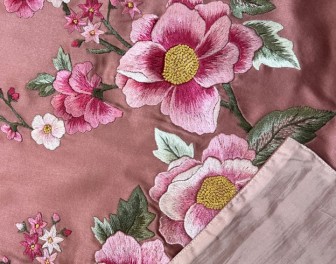
Hand-Embroidered vs Printed Silk Scarves: Which to Gift?
_cr_720x720_cr_336x264.jpg)
Meaningful Personalized Gifts: What Makes Them Feel Truly Special



Add: 61 Hang Gai St., Hoan Kiem Dist., Hanoi, Vietnam
Hotline: +84 936631368
Email: info@tanmydesign.com