
.png)
Hand Embroidery vs Machine: The Hidden Value in Handmade Gifts
Picture two beautifully wrapped gifts on a table. One carries the quiet character of hand embroidery. The other is flawlessly stitched by machine. Most people reach for the handmade piece without a second thought, assuming more labor means more meaning. That shortcut often leads to the wrong gift. When you're choosing a present for a valued partner, VIP, or milestone occasion, the real question is whether the craftsmanship fits the recipient's purpose, expectations, and the story you want your gift to tell.
Why does “hand embroidery vs machine” matter when choosing a meaningful gift?
Hand embroidery vs machine matters because a premium gift is judged by authenticity, origin, and human labor, not surface beauty alone. Machine embroidery is faster and more uniform, but hand embroidery carries visible time, maker identity, and cultural memory.
For a VIP, partner, or representative occasion, the comparison is not “which technique looks prettier.” The real decision is whether the gift can signal care, discernment, and Vietnamese heritage. UNESCO frames traditional craftsmanship as transmitted knowledge and skills, not only finished objects, so a hand-embroidered piece can carry cultural capital beyond decoration. Authenticity also reduces the buyer’s fear of choosing replica-like or mass-produced souvenirs, a risk repeatedly seen in Vietnam gift-shopping reviews and souvenir guidance.
The limit is clear: hand embroidery increases gift value only when finishing quality, provenance, and presentation support the story. Poor stitching, weak packaging, or unclear origin can make “handmade” feel risky instead of prestigious.
That technical difference becomes emotional when the giver stands in front of an important recipient.
I don’t worry first about whether the embroidery is beautiful. I worry whether the recipient will hold it and feel, “This was chosen carefully.” A machine-made piece can look neat, but it can also feel too easy, like something picked from a shelf at the last minute. Hand embroidery carries provenance (the traceable origin that tells me who made it, where it came from, and why it matters). That story gives me confidence when the gift has to represent taste, respect, and Vietnam.
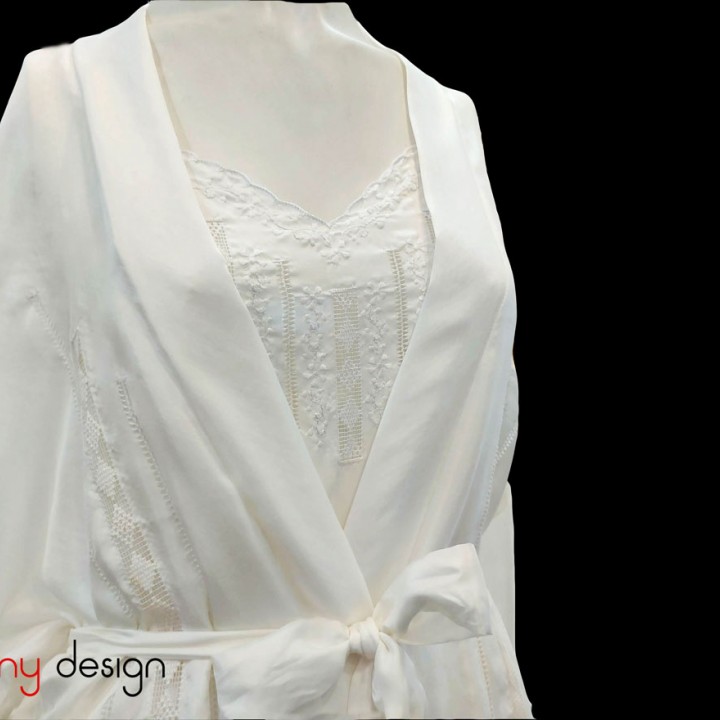
How can you tell if embroidery is truly handmade or just made to look handmade?
Use a 3-part test: front variation, reverse-side construction, and maker documentation; confidence is strongest when all 3 signals align.
- Inspect stitch variation: handmade embroidery usually shows small changes in stitch size, angle, spacing, or tension; machine embroidery often repeats with near-identical regularity. This is the highest-confidence visual clue, but deliberate “imperfect” machine work can imitate it.
- Check the back: hand embroidery may show knots, thread starts, stops, crossings, or looser transitions; machine work often looks more systematic, with carried threads or cleaner repeated paths.
- Read the texture and shading: handmade pieces often feel softer, more dimensional, and more naturally blended in color; machine embroidery can look denser, tighter, flatter, or too uniform under light.
- Ask for provenance: a documented artisan, workshop, label, signature, or process explanation is stronger evidence than price, shine, or a “handmade” claim alone.
A neat back, high price, or beautiful finish does not prove handmade origin; skilled artisans can work cleanly, and high-end machines can imitate irregularity.
For a VIP gift, authenticity is not just a craft detail; it protects the meaning of the gesture.
I remember the hesitation clearly: the piece looked elegant, but the stitches felt almost too even, and the lining hid the back. That is when reverse-side evidence became more than a technical check; it was the difference between giving something with cultural weight and giving a polished object with no story. I would rather ask one awkward question in the shop than watch a partner unwrap a gift that later feels mass-produced.
Key Takeaway: Trust handmade embroidery only when visible stitch behavior, reverse-side construction, and maker proof point to the same origin.
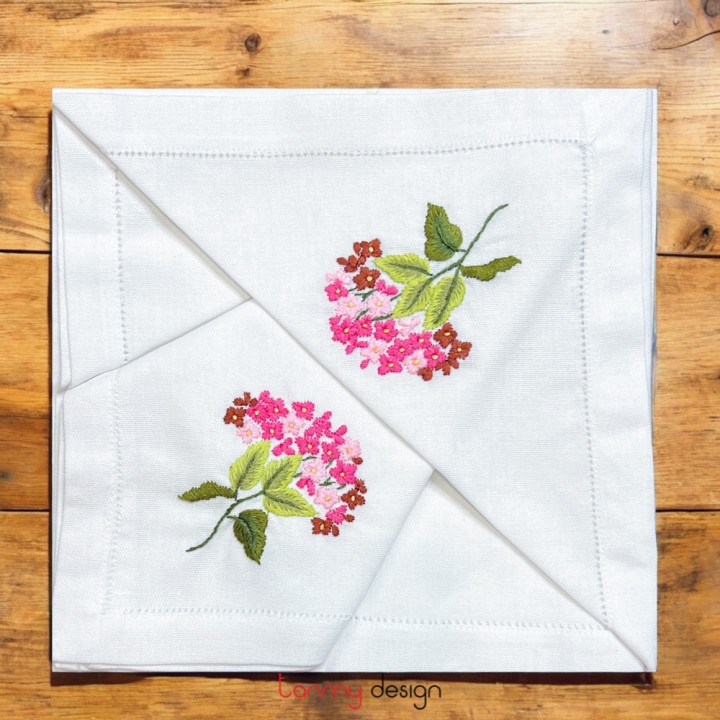
Why does machine embroidery often feel less personal in high-end gifting?
Machine embroidery can feel less personal because its speed, repeatability, and low visible effort weaken 3 gift signals: uniqueness, sacrifice, and recipient-specific care.
| Machine-embroidery strength | Luxury-gifting risk | Decision meaning |
|---|---|---|
| Speed | Fast production can read as low-sacrifice, even when the finish is neat. | Use machine embroidery for logos, uniforms, or repeatable branding; use hand embroidery when the gift must signal time and care. |
| Consistency | Uniform stitches reduce visible traces of the maker’s hand. | In hand embroidery vs machine, the emotional gap is often provenance, not neatness. |
| Scalability | Repeatable output can feel “just another name on the list.” | VIP gifts need scarcity cues: artisan name, limited quantity, dated work, or bespoke motif. |
| Cost efficiency | Lower unit cost can weaken perceived effort. | Research on gift receiving shows behavioral cost and effort can increase preference. |
| Decorative personalization | A monogram alone may not prove thoughtfulness. | Add recipient-specific symbolism, cultural context, and a clear story of why that motif was chosen. |
Machine embroidery is not low-quality by default; it becomes risky when automation leaves no visible evidence of authorship, cultural lineage, or deliberate selection.
That technical gap becomes emotional at the handover moment.
I imagine the buyer standing before the gift box, worried the piece will look polished but hollow. The fear is not “Will it look expensive?” It is “Will they feel I chose this for them?” Perceived effort — the quiet proof that time, skill, and attention went into the object — turns a beautiful item into a relationship signal. Without that proof, even an elegant embroidered gift can feel like premium packaging around a generic decision.
Key Takeaway: For high-end Vietnamese gifts, machine embroidery needs scarcity, provenance, and recipient-specific meaning to avoid feeling impersonal.
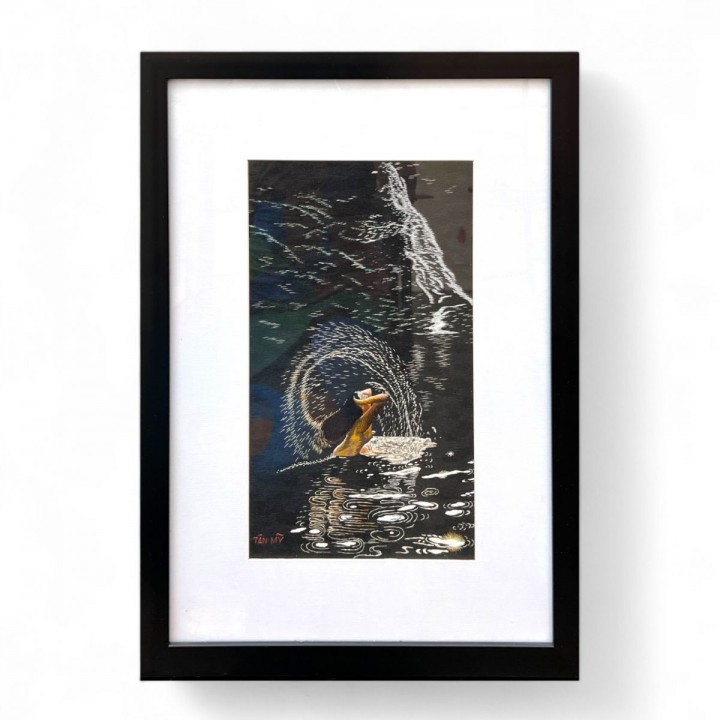
What hidden value does hand embroidery add beyond the visible design?
Hand embroidery adds 7 hidden values beyond visible design: material specificity, embodied skill, time, heritage, story, symbolic capital, and diplomatic suitability.
In hand embroidery vs machine, the difference is not only stitch appearance. UNESCO records embroidery as an intergenerational practice using specific materials such as silk thread on wool, linen, or cotton, with motifs that can signal regional identity, marital status, and economic status.
That means a handmade embroidered gift carries 3 decision signals: provenance, human labor, and cultural legibility. Machine embroidery can reproduce a pattern, but it cannot reproduce the maker’s acquired judgment, the family-style transmission, or the social meaning attached to the motif. Research on handmade products also shows that consumers often perceive handmade gifts as containing the maker’s care or “love,” especially in gift contexts.
The boundary is clear: hand embroidery only earns this premium meaning when the seller can explain origin, technique, artisan process, and cultural context; without provenance, “handmade” becomes a weak decorative claim.
For a VIP gift buyer, the real fear is not choosing something expensive. The fear is handing over a beautiful object that feels empty when the recipient asks, “Where is this from?” Hand embroidery solves that hesitation by giving the giver a story: who made it, what the motif carries, and why this piece could not be reduced to a factory-perfect copy.
Key Takeaway: Hand embroidery turns a gift from visual ornament into a traceable cultural object with labor, memory, and presentation value.
_cr_720x720.jpg)
Which 5-step framework helps you choose between hand embroidery and machine embroidery for VIP gifts?
Use a 5-step Recipient → Occasion → Authenticity → Story → Presentation framework to decide whether hand embroidery or machine embroidery fits a VIP gift context.
- Assess the recipient. Check role, seniority, culture, religion, public-official status, and relationship depth before comparing hand embroidery vs machine embroidery. Public-sector or corporate recipients may require modest value, approval, or documentation because gifts must stay transparent, proportionate, and lawful.
- Match the occasion. Tie the gift to a clear event: visit, milestone, farewell, partnership anniversary, or formal ceremony. A gift without a defensible occasion can feel transactional.
- Verify authenticity. Choose hand embroidery when uniqueness, visible craft, and cultural substance matter; choose machine embroidery when consistency, logo precision, or quantity matters. Machine embroidery has practical strengths, but hand and machine work create recognizably different outcomes.
- Build the story. Attach provenance, artisan context, Vietnamese cultural meaning, and why the piece suits this recipient. Cross-cultural etiquette guidance recommends explaining origin and symbolism, especially for locally made gifts.
- Control the presentation. Decide wrapping, note, handover style, and public/private delivery. Diplomatic gift handling shows that formal gifts often require context, records, and protocol, not just beauty.
Boundary: Hand embroidery is not automatically the right VIP choice; if the recipient needs branded consistency, strict compliance, or multiple identical pieces, machine embroidery may be safer.
A VIP gift succeeds when craft evidence reduces the buyer’s fear of giving something beautiful but empty.
For a VIP buyer, the hesitation is rarely “Is this pretty?” It is “Will this look mass-produced when the box opens?” The safer path is to check the recipient first, then let the embroidery method follow. Hand embroidery can carry provenance (the proof that the piece came from a real craft lineage, not a souvenir shelf). Machine embroidery can still work when the gift needs uniformity. The decision moment comes when the gift must represent respect without creating compliance discomfort.
_cr_720x720.jpg)
When is hand embroidery the safer choice for a Vietnamese cultural gift?
Hand embroidery is the safer choice when the gift must prove Vietnamese origin, artisan labor, and cultural meaning beyond decorative value. In hand embroidery vs machine selection, the decision point is provenance: named craft lineage, visible stitch variation, and a credible maker record reduce the risk of giving a generic souvenir.
Use hand embroidery for VIP, partner, diplomatic, or representative gifting when the recipient will read the object as a cultural signal. Vietnamese tourism sources value authentic hand-stitched textiles from recognized dealers because buying them helps preserve artistic skills and living craft traditions. Tân Mỹ Design strengthens that proof layer through a Hanoi Old Quarter origin, a 1969 founding story, and four generations preserving hand embroidery. For luxury gifting, this matters because the buyer is not only choosing an object; they are choosing whether the gift can carry a defensible story in front of a high-status recipient.
Machine embroidery can still suit uniform branding, repeat orders, or lower-risk decorative use, but it is weaker when the gift needs cultural authorship, scarcity, and visible human workmanship.
A safer gift is the one the giver can explain without overclaiming.
In a formal gifting moment, the quiet fear is not price; it is handing over something beautiful that feels hollow.
What should you ask before buying a handmade embroidered gift?
Before buying a handmade embroidered gift, ask for 7 proofs: material, stitch method, maker process, provenance, care, packaging, and after-sales terms.
- Verify material: Ask for fiber content, base fabric, thread type, backing, and close-up daylight photos. This separates real hand embroidery vs machine finishing from vague “premium textile” claims.
- Verify technique: Ask whether the piece is hand-stitched, machine-stitched, mixed, or appliqué, then request stitch close-ups or process video.
- Verify maker process: Ask who made it, where it was made, and whether dated workshop photos or a maker statement are available.
- Verify provenance: Ask for receipt, workshop identity, brand story, origin details, or item-specific certificate.
- Verify gift fit: Ask for dimensions, packaging photos, delivery date, customization limits, and whether the motif suits the occasion.
- Verify care: Ask for written washing, drying, ironing, storage, and repair instructions.
- Verify support: Ask for return, repair, defect, and replacement terms in writing.
If the seller cannot connect the finished gift to item-specific evidence, treat the handmade claim as weak, especially for VIP or partner gifting.
A beautiful gift lowers hesitation only when the buyer can explain its material, maker, meaning, and care without sounding unsure.
For a premium-gift buyer, the fear is not only paying too much. The real discomfort is handing over a polished box, then wondering whether the “handmade” story will collapse under one simple question: “Who made this?” Clear proof turns that tense moment into confidence.
Key Takeaway: A worthy handmade embroidered gift should come with proof, not just poetry.
The debate isn't hand embroidery versus machine embroidery. It's whether the gift reflects the person receiving it. Machine embroidery can be the wiser choice when consistency, durability, or brand presentation matters, while exceptional hand embroidery shines when artistry and cultural meaning are the message. If a seller asks you to pay for the word "handmade" without showing the quality behind it, treat that as a warning. To choose a Vietnamese gift with proven craftsmanship and lasting cultural value, explore the curated collections at Tân Mỹ Design.
FAQ
What is the main difference between hand embroidery and machine embroidery?
Hand embroidery is built stitch by stitch by an artisan, so small variations become part of the piece’s identity. Machine embroidery is programmed for consistent output, which suits logos, bulk orders, and identical patterns.
Why is hand embroidery usually valued higher as a gift?
A handmade embroidered gift carries cultural labor, time, and visible human judgment. For premium Vietnamese gifts, this matters because textiles and hand-stitched craft are described as rare, culturally rooted souvenirs that support living artistic skills.
How can buyers spot authenticity?
Check 3 signs: uneven-but-controlled stitch texture, a less mechanical reverse side, and design details that feel composed rather than duplicated. Thread can also reveal the process because hand embroidery threads are often softer than machine embroidery threads.
Other articles
Vietnamese Silk Scarf Motifs: Meanings & Gift Choices
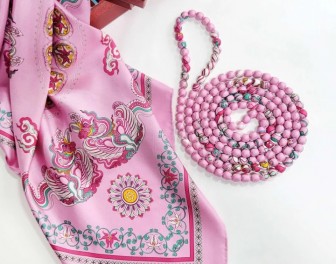
Square vs Long Silk Scarf: Which Makes a Better Gift?
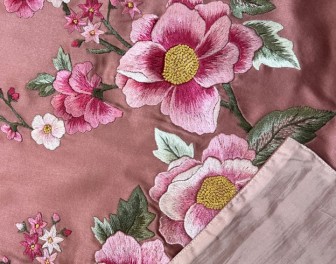
Hand-Embroidered vs Printed Silk Scarves: Which to Gift?
_cr_720x720_cr_336x264.jpg)
Meaningful Personalized Gifts: What Makes Them Feel Truly Special



Add: 61 Hang Gai St., Hoan Kiem Dist., Hanoi, Vietnam
Hotline: +84 936631368
Email: info@tanmydesign.com