

Hand-Embroidered vs Printed Silk Scarves: Which to Gift?
Choosing between a hand-embroidered silk scarf and a printed silk scarf comes down to the craftsmanship and visual character you want your gift to express. Hand embroidery adds textured stitching and visible artisanal detail, while printing allows intricate artwork, fluid colors, and a generally smoother surface. For an important gift, neither technique is inherently superior; the more thoughtful choice depends on the recipient’s personal style, appreciation of craftsmanship, and the meaning behind the design.
Hand-Embroidered vs Printed Silk Scarves: Key Differences
The main difference between a hand-embroidered silk scarf and a printed silk scarf lies in how the design is created: embroidery adds decorative stitches and texture, while printing applies color to the fabric. Neither technique automatically determines quality, price, or gift value.
| Feature | Hand-Embroidered Silk Scarf | Printed Silk Scarf |
|---|---|---|
| Craftsmanship | Designs are stitched by hand using needle and thread, requiring skilled manual work. | Designs are applied through printing techniques, such as digital or screen printing. |
| Appearance | Raised stitches create texture, directional sheen, and subtle variations. | A generally flatter surface allows detailed illustrations, gradients, and vibrant patterns. |
| Reverse side | May reveal thread paths, knots, or stitching details. | May show lighter or mirrored colors, depending on the printing method. |
| Price | Influenced by embroidery time, motif complexity, and artisan skill. | Influenced by printing technology, artwork, production volume, and finishing. |
| Gift value | Suits recipients who appreciate visible handwork and traditional craftsmanship. | Suits recipients who favor contemporary designs, expressive artwork, or smooth styling. |
Hand embroidery does not guarantee exclusivity or a higher price. Premium printed scarves can feature pure silk and hand-rolled edges, while embroidered designs may also be produced in quantities.
How Do Hand Embroidery and Silk Printing Differ in Craftsmanship?
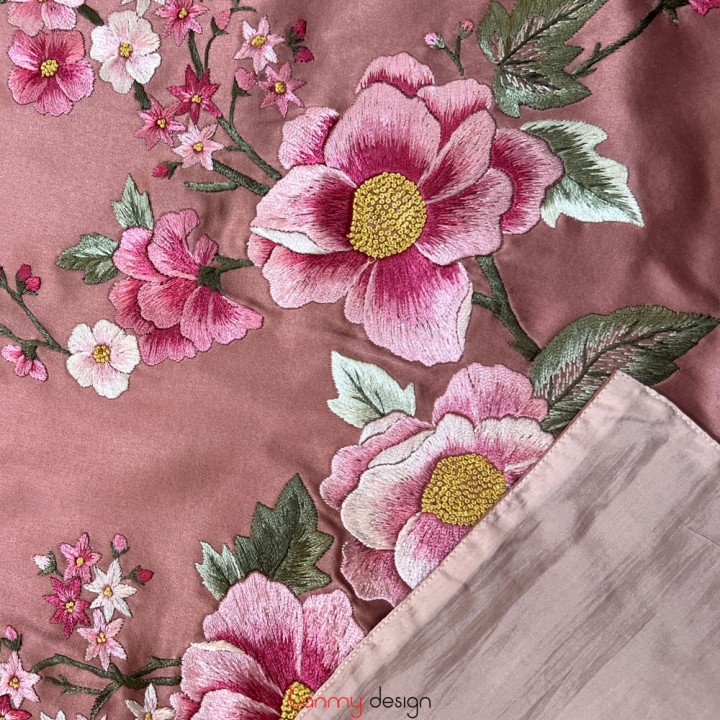
Hand-embroidered silk scarves are decorated by stitching threads through the fabric, creating textured motifs, while screen-printed silk scarves use ink transferred through a patterned mesh. Both techniques require skill, but their craftsmanship is expressed differently.
In hand embroidery, artisans transfer a design onto silk, select suitable threads, and build motifs stitch by stitch. Techniques such as satin stitch create smooth, filled shapes, while chain stitches and French knots add distinctive textures. Consistent tension, carefully controlled spacing, and neatly finished stitching reveal the precision involved. The reverse side can also provide clues about how the threads were worked. Embroidery trade-theory reference.
Screen printing requires a different form of expertise. Each color is prepared as a separate stencil, with ink pressed through the screen onto the fabric. Accurate alignment between color layers, even ink application, and appropriate curing are essential to the finished design.
The distinction lies in where the craftsmanship is visible: embroidery emphasizes individual stitches and threadwork, while screen printing emphasizes design precision and color registration.
Visible stitches do not, by themselves, prove hand embroidery, just as screen-printed patterns do not establish whether printing was manual or automated.
For buyers considering Tân Mỹ Design, the most reliable approach is to examine the specific scarf's decoration and product description. Some designs may combine printing with hand-embroidered details, making the actual technique more informative than a general collection label.
How Do Embroidered and Printed Silk Scarves Compare in Appearance?
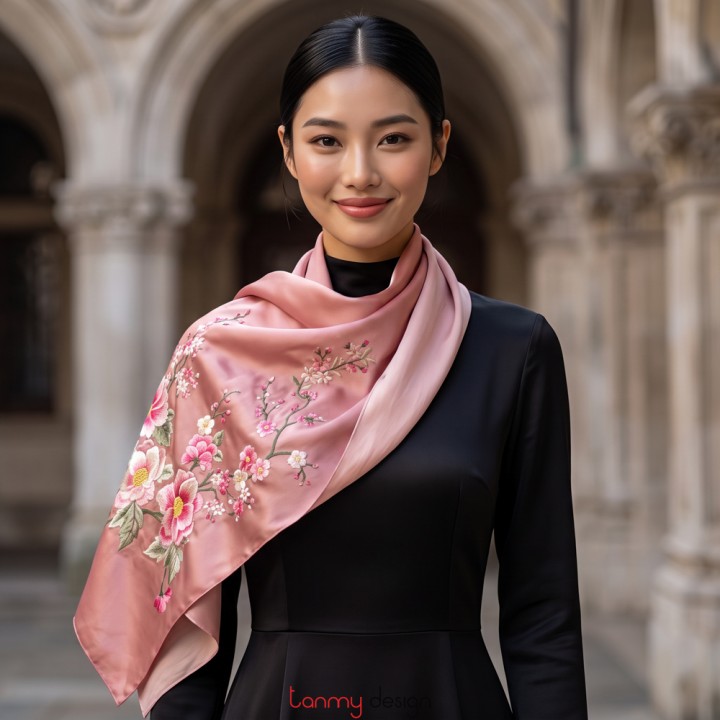
Hand-embroidered silk scarves feature raised stitching, visible threadwork, and textured motifs, while printed silk scarves generally have flatter surfaces, finer pictorial details, and smoother color transitions. Both can appear elegant, but their decorative techniques create different visual effects.
| Visual Feature | Hand-Embroidered Silk Scarf | Printed Silk Scarf |
|---|---|---|
| Surface texture | Raised stitches create tactile depth and subtle shadows. | Designs lie relatively flat against the silk. |
| Pattern detail | Visible threadwork defines motifs, outlines, and decorative shapes. | Fine lines, intricate illustrations, and photographic details are possible. |
| Color effects | Thread colors and stitch direction create distinct highlights and tonal variation. | Digital printing allows smooth gradients and complex color combinations. |
| Light reflection | Individual stitches catch light differently depending on their direction. | Sheen primarily follows the silk's weave and finish. |
| Reverse side | Stitching may be visible, depending on construction. | Colors may appear lighter or mirrored, unless double-sided printing is used. |
| Overall impression | Textured, dimensional, and visibly handcrafted. | Smooth, pictorial, and often more visually continuous. |
These distinctions reflect established differences between embroidery techniques and silk printing methods.
For gifting, the visual difference matters more than any assumed hierarchy of quality. Choose embroidery when the recipient appreciates visible handwork; consider printing when detailed artwork and flowing color better suit their style.
Neither technique automatically guarantees superior softness, drape, or silk quality. These qualities also depend on fabric construction and finishing, as illustrated by the Victoria and Albert Museum's documentation of printed silk twill.
Why Do Hand-Embroidered and Printed Silk Scarves Have Different Prices?
Hand-embroidered silk scarves often cost more than basic printed designs because decorative stitching requires skilled manual work. However, silk quality, scarf dimensions, design complexity, finishing, and retail positioning also influence the final price.
At Tan My Design, the supplied product listings illustrate these differences:
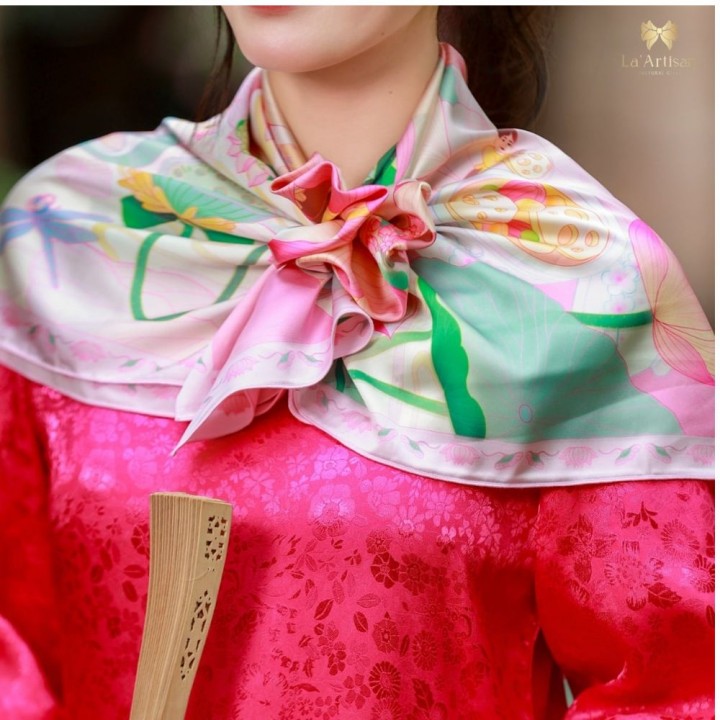
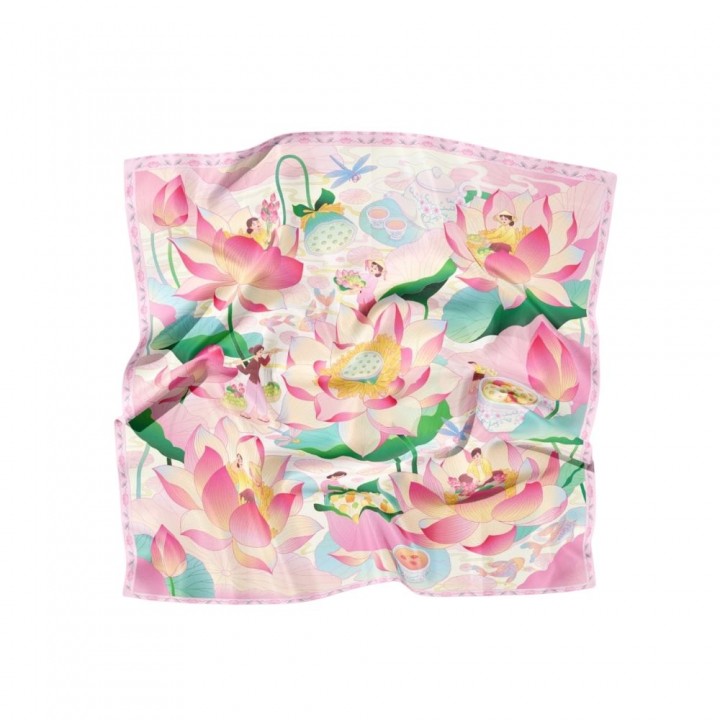
- Printed silk scarves: Several 70 × 70 cm double-sided designs are listed at VND 749,000–989,000, while selected culturally themed designs reach VND 2,450,000–2,490,000. Printed scarf collection.
- Hand-embroidered silk scarves: Several 25 × 200 cm floral designs are listed at VND 1,250,000, while other embroidered scarves reach VND 7,500,000. Hand-embroidered collection.
The differences reflect several potential cost drivers. Hand embroidery requires time for individual stitches and detailed motifs. Meanwhile, finer or heavier silk, larger fabric dimensions, intricate printing, double-sided decoration, and carefully finished edges can increase production costs regardless of technique.
A revealing example is the 25 × 200 cm embroidered range, where listed prices vary from VND 1,250,000 to 6,350,000 despite identical stated dimensions. The available specifications do not establish precisely what accounts for that difference.
These listings are not equivalent product comparisons, so they cannot establish an exact embroidery premium.
For an important gift, compare fabric specifications, visible workmanship, finishing, and the recipient’s taste, rather than assuming the higher-priced scarf is automatically more valuable.
Which Silk Scarf Should You Choose for an Important Gift?
Choose a hand-embroidered silk scarf when the recipient appreciates traditional craftsmanship and delicate handmade details. Choose a printed silk scarf when their personal style, preferred colors, and everyday wearability matter more than visible handwork.
For milestone occasions such as anniversaries, weddings, or formal thank-you gifts, hand embroidery can express a particular appreciation for artistry. Its raised stitches create texture and reveal the decorative work involved. A printed scarf, however, may be equally thoughtful when its artwork or colors reflect the recipient’s personality. Printing also allows intricate patterns that would be difficult to reproduce through embroidery.
| Consideration | Hand-embroidered silk | Printed silk |
|---|---|---|
| Recipient's taste | Traditional artistry, subtle details | Contemporary patterns, expressive colors |
| Gift occasion | Milestones, ceremonial gifts | Birthdays, travel, everyday gifting |
| Personal significance | Visible handwork and craftsmanship | Meaningful imagery and personal style |
| Budget | Consider the cost of handwork | Compare designs within your budget |
Research on gift-giving suggests that recipient preferences and perceived thoughtfulness matter more than price alone. A more expensive embroidered scarf is not necessarily a more appreciated gift.
At Tân Mỹ Design, the most meaningful choice begins with the person receiving it. Compare the design, silk quality, and finishing, then choose the scarf they are most likely to cherish and wear.
What Should You Check Before Buying a Silk Scarf as a Gift?
Before buying a silk scarf as a gift, check its fabric composition, dimensions, decoration technique, finishing, and care requirements. For an important occasion, confirm the exact item and purchase conditions rather than relying on product photographs alone.
Use this checklist when choosing a hand-embroidered or printed silk scarf from Tân Mỹ Design:
- Silk composition: Look for the stated fiber percentage and silk weight, if available. A “silk” label alone does not independently verify purity or quality.
- Craftsmanship: Confirm whether the design is hand-embroidered or printed. For embroidery, inspect stitch details and the reverse; for printing, examine color definition and pattern alignment.
- Size and drape: Check the scarf’s exact dimensions. Square and long scarves offer different styling possibilities.
- Color and design: Request current photographs of the actual piece when color accuracy or embroidery placement matters.
- Finishing and care: Examine the edges, stitching, and care instructions to understand how the scarf should be handled.
- Gift presentation: Confirm whether a gift box, wrapping, or personalized message is available and whether it costs extra.
- Price and availability: Verify the final price, exact color or design in stock, delivery timing, and any additional shipping charges.
- Exchange conditions: Review Tân Mỹ Design’s published policy. Exchanges are subject to conditions, while returns are generally limited to defects or incorrect items.
For an important gift, request written confirmation of the scarf’s specifications, current photographs, availability, and applicable exchange terms before payment.
For someone who cherishes traditional artistry and the human touch, a hand-embroidered silk scarf can make a particularly meaningful gift. If the recipient favors contemporary elegance, expressive patterns, or vibrant artwork, a printed silk scarf may feel more personal. Neither technique alone guarantees better silk quality or lasting value. When exploring Tân Mỹ Design’s collection, consider the recipient’s taste first, then examine the fabric, decorative details, and finishing before making your choice.
Other articles
Vietnamese Silk Scarf Motifs: Meanings & Gift Choices
Square vs Long Silk Scarf: Which Makes a Better Gift?
_cr_720x720_cr_336x264.jpg)
Meaningful Personalized Gifts: What Makes Them Feel Truly Special
Thoughtful Gifts That Feel Personal Without Being Too Personal



Add: 61 Hang Gai St., Hoan Kiem Dist., Hanoi, Vietnam
Hotline: +84 936631368
Email: info@tanmydesign.com