
.png)
Vietnamese Handkerchief Embroidery: Heritage Stitched by Hand
There’s a quiet poetry stitched into every thread of handkerchief embroidery in Vietnam - each motif a memory, each border a whisper of tradition. In Hanoi, artisans still sit at sunlit balconies, hand-stitching delicate florals and ancestral patterns passed down through generations. For those who seek elegance, meaning, and cultural depth, these handcrafted treasures offer far more than beauty - they carry the soul of a heritage.
What Makes Vietnamese Handkerchief Embroidery Unique?
Vietnamese handkerchief embroidery stands out for its double-sided needlework, silk-on-silk materiality, and symbolic storytelling rooted in centuries-old cultural traditions.
Unlike Western styles that emphasize counted threads or monograms, this art form “paints” scenes with silk split into ultra-fine strands - sometimes 1/16th of a thread - to create lifelike images with no visible knots on either side. In elite pieces, the reverse mirrors the front, a meticulous technique known as thêu hai mặt, especially valued in handkerchiefs where both sides are visible.
Regionally, Hue’s court embroidery used gold threads and imperial motifs, while Quất Động village in Hanoi preserved naturalistic and emotional themes. These weren’t just decorative - motifs like lotuses symbolized purity, while phoenixes represented grace and matrimonial harmony. Historically, handkerchiefs served as intimate love tokens, later transforming into diplomatic gifts and cultural keepsakes during exile. Even today, artisans at Tan My uphold this tradition not as mere craft, but as a living expression of memory, love, and resilience.
_cr_720x720.jpg)
How Tân Mỹ Design Preserves Generational Craftsmanship
Tân Mỹ Design preserves generational handkerchief embroidery by sustaining a four-generation matriarchal lineage and maintaining an exclusive artisan network committed to 100% handmade craftsmanship.
Founded in 1969 by Bạch Thị Ngải, the business has passed through each generation of women, evolving from traditional embroidered handkerchiefs into a full cultural brand. Each successor has layered new strategy: from Đỗ Thanh Hương’s expansion into fashion, to Nguyễn Thùy Linh’s creation of a modern showroom, and now Kitty’s growing presence with global clients.
Rather than outsourcing to mass villages, the brand works with 500 dedicated artisans, trained not only in stitching but also in painting and drawing. This ensures they can translate complex designs by hand, often requiring weeks - or up to a year - for a single piece. Their technique of thread-splitting enables fluid, organic textures unachievable by machine.
The two-location setup physically documents the journey: 66 Hàng Gai safeguards heritage pieces, while 61 Hàng Gai explores collaborations with contemporary artists. Tân Mỹ’s meticulous quality control, natural materials, and high-profile clientele - from Bill Clinton to the Queen of Spain - affirm its status as a living archive of Vietnamese craftsmanship.
The Process Behind Every Hand-Stitched Masterpiece
Each handkerchief embroidery at Tân Mỹ Design follows a time-honored, six-step process carried out by dedicated artisans to preserve Vietnam’s generational artistry.
It begins with original design sketches inspired by traditional motifs, carefully transferred onto premium cotton or silk. The fabric is then mounted in an embroidery hoop, and fine threads are selected - often separated strand by strand to achieve delicate detailing.
A single artisan completes each piece using meticulous stitches like satin, split, or shadow techniques - each requiring a distinct level of expertise. The handkerchief is then washed, pressed, and inspected by senior members of the founding family to ensure flawless quality.
This artisanal commitment means a simple floral piece can take 3 to 7 days, while intricate works may require weeks. The “single hand” rule ensures every item carries the artisan’s unique imprint, making each one irreplaceably personal.
.jpg)
Why Hand-Embroidered Handkerchiefs Are the Ultimate Cultural Gift
Handkerchief embroidery is the ultimate cultural gift because it fuses Vietnamese soul, artistry, and social symbolism into a single, hand-stitched object. More than decoration, these pieces preserve history, emotion, and identity in tangible form.
During wartime, they were love pledges stitched by hand - messages like “Đợi anh về” bridged battlefield and home. Today, though often wrapped in superstition, they’re reframed through rituals like the “coin exchange,” which transforms a sensitive gesture into meaningful exchange.
As diplomatic tokens, they convey national elegance through motifs like bamboo and lotus. Tourists prize them as authentic textile art, while younger artisans turn them into slow luxury - reviving heritage as sustainable statements. Brands like Tan My show how a simple cloth becomes art, memory, and message in one.
From Heritage to Modern Elegance: How the Tradition Evolves
Vietnamese handkerchief embroidery has evolved by blending its heritage roots with refined modern aesthetics to attract contemporary global audiences.
Ateliers like Tân Mỹ Design have redefined tradition by transforming the once-static souvenir model into a vibrant design hub that showcases hand embroidery on high-fashion garments, abstract jewelry, and eco-conscious accessories. This innovation preserves artisanal integrity while making the craft relevant to minimalistic and sustainable tastes worldwide.
_cr_720x720.jpg)
Through collaborations with designers such as Ha Truong and Quang Huy, traditional needlework now adorns flowing silhouettes and luxury homewares, while motifs like lotus and bamboo speak to both cultural memory and design modernism.
Comparable brands like Hanoia and XQ further this shift - whether through fusions of lacquer and silk or performance-based textile storytelling - pushing Vietnamese craftsmanship into art, not artifact. These strategies have led to documented outcomes including international acclaim, rising exports, and certified eco-friendly materials, validating their success in adapting heritage to the demands of ethical luxury seekers and design-savvy collectors.
Elegance stitched with purpose ensures the soul of Vietnamese embroidery not only survives, but thrives.
Visit the Heart of Embroidery Art in Hanoi
Tân Mỹ Design offers a rare glimpse into handkerchief embroidery where heritage meets innovation in the heart of Hanoi.
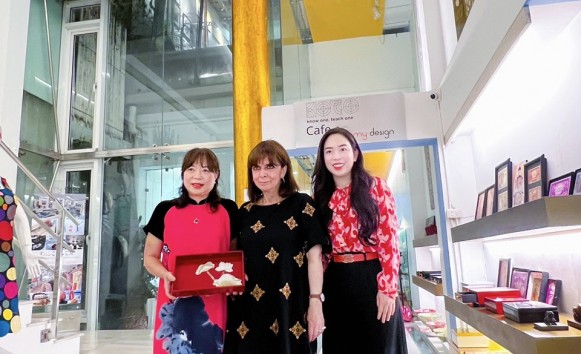
Founded as an evolution of a 50-year-old family atelier, this 1,000m² space redefines the souvenir shop into a refined design hub. Here, traditional stitching techniques are applied to contemporary fashion and luxury decor through collaborations with designers like Ha Truong and Quang Huy.
Moving beyond table linens and áo dài, their hand embroidery now adorns jewelry and lacquerware, featuring stylized motifs like lotus and bamboo. The studio also champions sustainability by partnering with eco-conscious brands using recycled plastics and organic silk.
This seamless fusion of legacy, modern design, and ethical values has earned Tân Mỹ Design recognition from global press and elevated Vietnamese craft to a global stage.
To hold one of these embroidered handkerchiefs is to hold time, care, and living history in your palm. Whether you’re gifting a loved one or collecting meaningful art, each piece invites you into a story that’s both deeply personal and culturally rich. Discover refined authenticity at Tân Mỹ Design - where every stitch honors 50 years of Vietnamese craftsmanship.
Other articles
Vietnamese Silk Scarf Motifs: Meanings & Gift Choices
Square vs Long Silk Scarf: Which Makes a Better Gift?
Hand-Embroidered vs Printed Silk Scarves: Which to Gift?
_cr_720x720_cr_336x264.jpg)
Meaningful Personalized Gifts: What Makes Them Feel Truly Special



Add: 61 Hang Gai St., Hoan Kiem Dist., Hanoi, Vietnam
Hotline: +84 936631368
Email: info@tanmydesign.com