
.png)
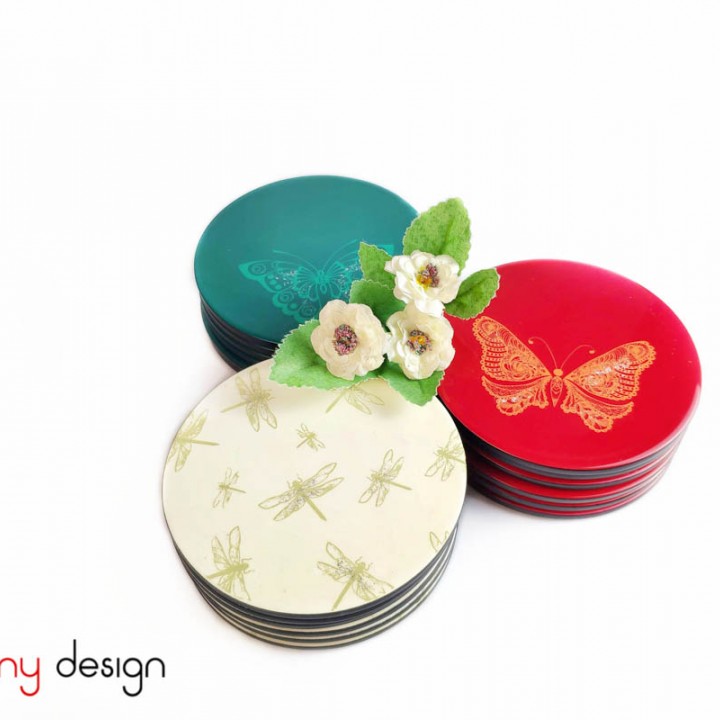
Handmade Coaster Set: Small Gift Carrying Vietnamese Culture
Finding a gift that feels truly representative - of culture, of respect, of your own standards - is harder than it should be. Too many options look refined at first glance but fall short in authenticity and story. A handmade coaster set, when crafted with intention, becomes more than a decorative item - it carries the quiet depth of Vietnamese heritage into every setting. It’s in these small, thoughtful details that a gift begins to feel worthy of the moment.
What Is a Handmade Coaster Set (And Why Most People Misunderstand It)
A handmade coaster set is a functional craft object that unites real tabletop performance, visible maker authorship, and traceable production - not just something “made by hand” or decorated for appearance. The misunderstanding comes from confusing true craftsmanship with generic craft items that prioritize surface design over use and origin.
In authentic sets, materials and processes are chosen for function: ceramic or stoneware for weight and condensation handling, cork backing for grip and protection, and finishes designed for daily durability. At the same time, each piece carries “process signatures” - subtle variations in glaze, shape, or grain that reflect the maker’s direct control, not mass templates.
Equally important is provenance. A true set connects clearly to its maker through documented process, realistic production scale, and consistent specialization - signals of trust that elevate it beyond decorative gifting.
Key takeaway: A real handmade coaster set is defined by function, authorship, and provenance - not just the label “handmade.”

Why Coaster Sets Became a Popular Gift Choice
Handmade coaster sets became popular because they reduce buyer risk: they are affordable, practical, easy to match, and widely acceptable - even when the giver lacks personal insight into the recipient.
- Fit common gifting needs by being affordable, useful, and suitable for occasions like housewarmings, holidays, and appreciation gifts
- Match diverse interiors thanks to neutral design appeal, making them easy to pair with different décor styles without conflict
- Solve low-information decisions when buyers don’t know the recipient well and default to “safe” options with broad acceptance
- Simplify purchase logistics through compact size, easy shipping, and convenient bundling with other items
- Balance function and form by offering both utility (protecting surfaces) and light decorative value without requiring bold taste choices
Yet these same advantages make them easy to forget: what feels safe to give often feels generic to receive.
Key takeaway: Coaster sets are popular because they minimize uncertainty for the giver - but without personalization or story, they rarely create lasting impression.
The Core Problem: Why Most Handmade Coasters Feel Cheap
Most handmade coaster sets feel cheap because they fail on 5 core signals: material quality, finish precision, functional reliability, personalization depth, and packaging presentation - shifting them from crafted gifts to commodity items.
- Use weak materials - Thin MDF, brittle resin, or low-grade composites signal short lifespan instead of durability (unlike ceramic, stone, or hardwood).
- Show visible defects - Crooked engraving, rough edges, uneven resin curing, or missing non-slip backing indicate careless execution.
- Lack functional trust - Poor heat tolerance, moisture resistance, or structural strength makes the coaster feel unreliable in real use.
- Apply generic personalization - Template-style names or designs feel mass-produced rather than intentionally crafted.
- Deliver poor packaging - Minimal or generic boxes downgrade the product into a “filler favor” instead of a premium gift experience.
Key takeaway: A handmade coaster set only feels premium when every detail - material, craft, function, customization, and packaging - works together to signal authenticity and care.
_cr_720x720.JPEG)
The Critical Difference: Hand Embroidery vs Generic Handmade
Hand embroidery stands apart because it visibly records human labor at the stitch level, while resin and printed formats prioritize finish, speed, and replication rather than micro-crafted detail.
| Aspect | Hand Embroidery | Resin Handmade | Printed Designs |
|---|---|---|---|
| Craft signal | Stitch-by-stitch variation in direction, tension, and texture; no two pieces identical | Craft shown through casting clarity, inclusion placement, and polish | Defined by sharp graphics and color consistency, not tactile depth |
| Production time | Slow: ~2–4 hours (simple) to 10–40+ hours (intricate) per piece | միջ-range: curing ~12–72 hours plus prep | Fast after setup: scalable to hundreds of units/hour |
| Value perception | Artisan, heritage-rich, often seen as luxury or collectible | Durable, design-driven, material-focused premium | Efficient, cost-effective, visually bold |
For a handmade coaster set, embroidery signals authenticity through visible effort - something replication methods cannot fully convey.
Key takeaway: Embroidery wins when craftsmanship itself is the value; other methods win when speed, uniformity, or finish take priority.
Cultural Layer: When a Coaster Set Becomes a National Representation
A handmade coaster set becomes a national representation when it is authentically Vietnamese in craft, symbolically meaningful in motif, and intentionally framed within Vietnamese gifting culture.
- Ensure authentic craftsmanship by sourcing hand-embroidered pieces made within a recognized Vietnamese tradition, not “Vietnamese-inspired” imports.
- Select symbolic motifs such as lotus (purity, resilience) or bamboo (strength, adaptability) to transform décor into cultural narrative.
- Match motif to occasion by aligning meaning - lotus for dignity and goodwill, bamboo for progress, bird pairings for affection.
- Frame the gifting context as modest and respectful, reflecting Vietnamese norms that prioritize thoughtfulness over display.
- Include cultural provenance such as artisan stories or craft-village origins to elevate the set from handmade object to living heritage.
Without these elements, the piece reflects craftsmanship alone; with them, it carries national identity.
Key takeaway: Cultural representation depends on 3 factors - authentic origin, meaningful symbolism, and intentional gifting context.
_cr_720x720.JPEG)
Operator Insight: How Experts Choose Gifts for VIPs
Experts choose a handmade coaster set for VIP gifting by applying 3 strict filters: portability, distinctiveness, and cultural meaning.
- Ensure easy handling and presentation
Select a gift that is compact, lightweight, and simple to deliver. A handmade coaster set fits naturally into executive routines - easy to carry across borders, elegant to present, and practical for desks or meeting spaces. - Prioritize visible uniqueness
Choose items that avoid generic luxury. Hand-embroidered coasters stand out through artisanal details - motifs, stitching styles, or custom monograms - signaling care, rarity, and intentional selection. - Align cultural meaning with context
Pick a gift that tells a clear story about identity or values. Embroidery communicates heritage, symbolism, and craftsmanship, allowing the giver to express respect while sharing Vietnamese culture in a refined way.
Key takeaway: A handmade coaster set works for VIP gifting because it is small yet refined, distinctive without excess, and culturally expressive without complexity.
A well-chosen coaster set doesn’t compete for attention - it earns it through meaning, craftsmanship, and presence. For occasions where your gift reflects more than courtesy, authenticity is what lingers. Explore Tân Mỹ Design to find handcrafted pieces that embody Vietnamese culture with the refinement your most important relationships deserve.
FAQ – Common Questions & Objections
Is a handmade coaster set premium enough for gifting?
Yes - if it shows real craftsmanship, traceable origin, and durable daily use. Look for skilled finishing, material transparency, and reliable performance, not just decorative appeal.
How can I tell if it’s truly handmade?
Check for slight natural variation, artisan details, and a clear making process. Perfect uniformity, vague origin, or mass availability at low prices signals imitation.
Will it protect furniture well?
Yes - if it meets functional standards. A good set has non-slip backing, ≥3 mm thickness, and resists moisture transfer, staining, or warping.
Do imperfections mean lower quality?
No. Controlled asymmetry and subtle variation indicate handwork. Flaws only matter if they affect stability, finish, or usability.
Is a higher price justified?
Yes - when it reflects labor, materials, and maker transparency. Price alone isn’t proof, but underpricing often suggests mass production.
Is it suitable for corporate gifting?
Yes. A well-made set communicates cultural authenticity, thoughtful selection, and lasting value - key for high-level, representative gifts.
Other articles
How to Choose a Tie Gift He’ll Actually Wear: A Practical Guide
How to Care for a Silk Scarf Without Damaging It
Is a Silk Scarf Worth the Price? How to Judge Quality and Durability
How to Tell If a Silk Scarf Is Real: Check Before Buying Online



Add: 61 Hang Gai St., Hoan Kiem Dist., Hanoi, Vietnam
Hotline: +84 936631368
Email: info@tanmydesign.com