
.png)
How to Choose a Tie Gift He’ll Actually Wear: A Practical Guide
A tie makes a better gift when it fits the recipient’s wardrobe, not simply when it looks distinctive in the box. Versatile colors such as navy, burgundy, forest green, and charcoal, restrained patterns, and proportions that suit his usual jackets are more likely to work across meetings, dinners, weddings, and other formal occasions. For a premium gift, the real choice is therefore between visual character and everyday wearability: enough personality to feel considered, but enough restraint to become part of what he already wears.
Start With the Man, Not the Tie
A tie gift is more likely to be worn when you begin with what he already wears—not with the color or pattern you personally prefer. Use this quick checklist to narrow the choice:
- Check his suits first. Navy works easily with burgundy, dark green, silver, or patterned blue; grey suits pair well with navy, burgundy, plum, or deeper green.
- Look at his usual shirts. White gives you the widest range. With pale blue or pink shirts, navy and burgundy remain versatile choices.
- Notice how much pattern he already wears. If the shirt or suit is patterned, choose a plain tie, a lightly textured weave, or a clearly different pattern size rather than adding another competing print.
- Match the occasion. Business meetings usually call for restrained silk ties and classic colors; weddings or social events can allow more expressive patterns. Very formal black-tie dress calls for a bow tie rather than a standard necktie.
- When you know very little, stay controlled. A medium-width tie in navy, burgundy, charcoal, or dark green, with a subtle pattern or texture, depends less on guessing his taste.
One caution: what he wears for work may reflect a dress code rather than his personal style. Whenever possible, look across several outfits before choosing.
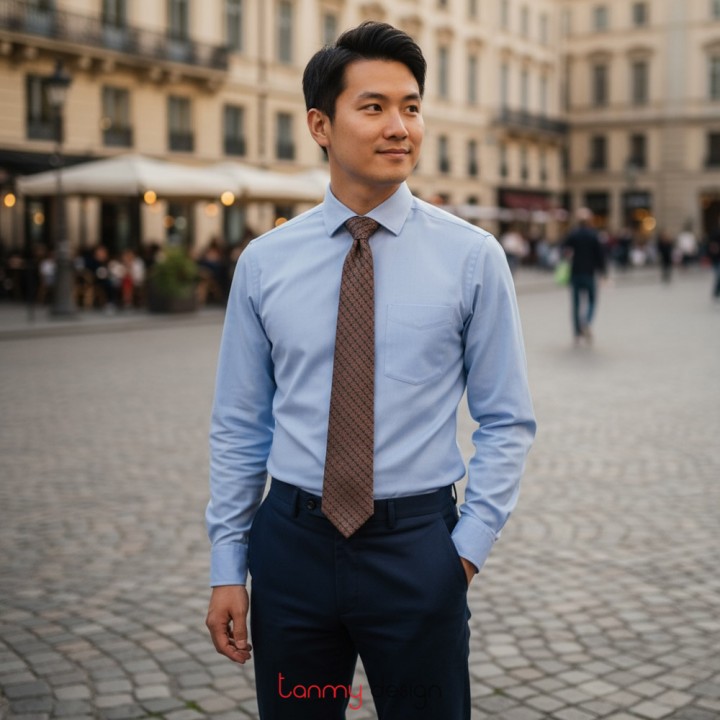
When to Choose a Classic Tie and When to Choose Something More Distinctive
The safest tie gift is not necessarily the most expensive or unusual one. The better choice depends on how well you know his style, where he is likely to wear it, and how formal those occasions are.
| Choose a classic tie when… | Choose something more distinctive when… |
|---|---|
| You know little about his wardrobe or are buying for a colleague, senior executive, or business partner. | You already know the colors, patterns, or fabrics he regularly wears. |
| He works in a traditional business environment such as finance, law, or formal corporate settings. | His workplace or social life allows more personal expression. |
| The gift marks a promotion, new role, formal meeting, or other occasion where versatility matters. | The gift is for a birthday, anniversary, or personal occasion where individuality carries more meaning. |
| You want maximum compatibility with navy, grey, or charcoal suits. Navy, burgundy, subtle stripes, or small patterns are dependable choices. | He already owns the basics and would appreciate richer texture, refined paisley, deeper unusual colors, or a carefully chosen statement pattern. |
There is one important exception: more distinctive does not automatically mean better. A bold tie that conflicts with his usual wardrobe may remain unworn, while a beautifully made classic tie can become part of his regular rotation. And if the event specifically requires black tie, a traditional long tie is not the correct choice; a black bow tie is expected instead.
When uncertain, choose refinement over novelty: a versatile color, restrained pattern, and high-quality material give him more opportunities to actually wear the gift.
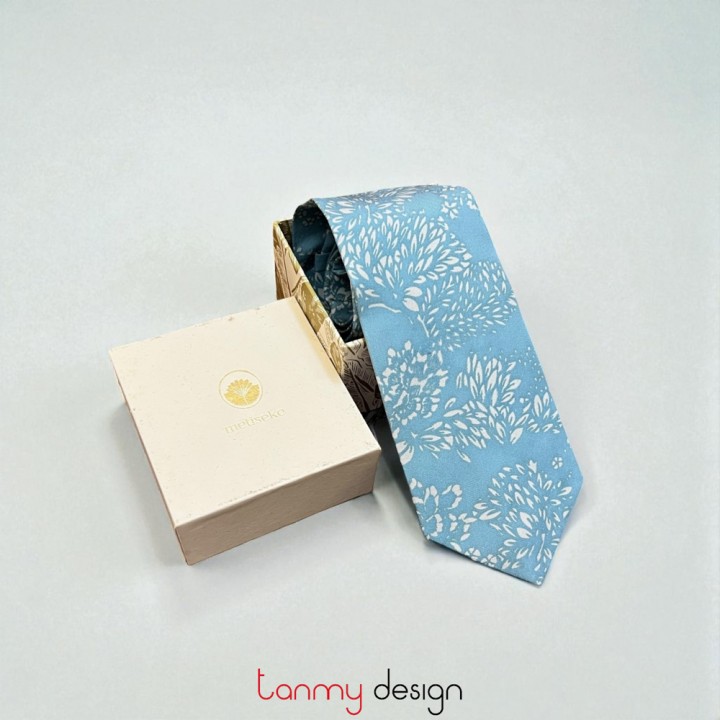
Choose a Tie Color He Can Actually Pair With His Clothes
The safest tie gift is not simply the most “classic” color; it is the color that creates enough contrast with the shirts and suits he already wears. Navy and burgundy cover the widest range of common wardrobes, while forest green or grey work well when you want something slightly less expected.
| If he often wears… | Safer tie colors | Be careful with… |
|---|---|---|
| Navy suit + white shirt | Burgundy, forest green, grey, patterned blue | A navy tie too close to the suit, which can make the outfit look flat |
| Grey or charcoal suit | Navy, burgundy, dark green, black | Very pale silver with a light-grey suit because the contrast may disappear |
| White shirts | Navy, burgundy, dark green, grey | Very bright colors for conservative or formal occasions |
| Light-blue shirts | Navy, burgundy, forest green | Ties that are too close to the shirt in brightness |
| Pink or lavender shirts | Navy, burgundy, charcoal, dark green | Matching pastel ties that leave the whole outfit looking washed out |
One useful rule cuts through most choices: choose a tie darker than the shirt, then check whether its pattern competes with the shirt or suit. A “safe” navy tie can still fail when the suit, shirt, and tie are all similar shades, or when two striped pieces use nearly identical stripe sizes.
For a premium gift when you do not know his wardrobe well, burgundy or navy in a restrained pattern is the lowest-risk starting point.
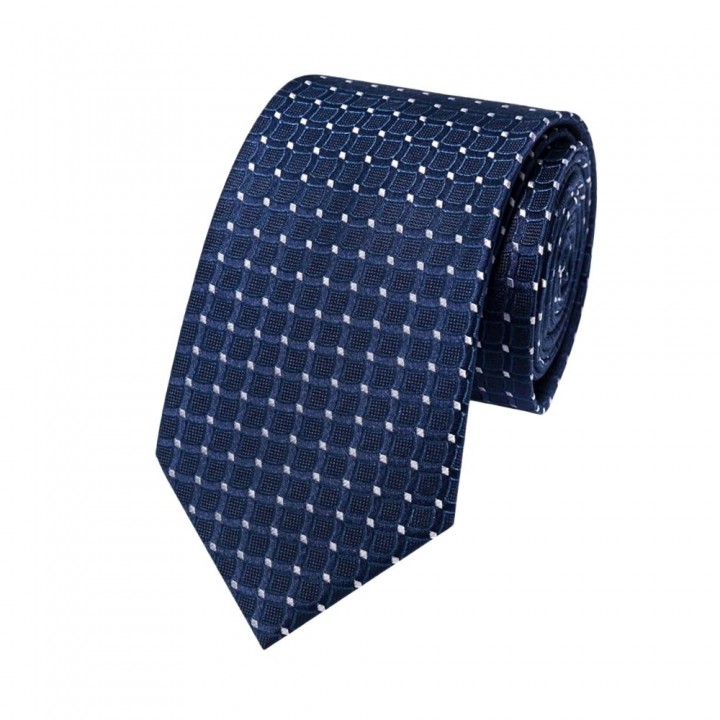
Pick a Pattern That Matches How Boldly He Dresses
A tie he will actually wear should match his usual level of visual boldness, not simply the pattern you find most memorable. If he normally wears plain navy, grey, white, or light-blue combinations, a solid tie or a small repeating pattern is the safest gift. These styles stay easy to combine even when his shirt or suit already has some detail.
Think of tie patterns as a simple scale:
Solid → micro pattern → stripe → geometric → bold floral or paisley
Moving to the right usually demands more care because the tie competes more strongly with the rest of the outfit. The key is not that patterned ties are difficult by themselves, but that patterns of similar size and strength can fight for attention. A fine-striped shirt, for example, works better with a much broader stripe or a clearly different pattern than with another fine stripe.
For a man who regularly wears patterned jackets, expressive shirts, or creative combinations, a stronger tie can still work beautifully. Look for different pattern sizes, one shared color, and only one element that truly dominates.
As a gift rule: when unsure, choose one step quieter than his boldest everyday outfit.
Why Silk, Construction and Finish Matter in a Premium Tie Gift
A premium tie should be judged by how the fabric, inner structure and finishing work together when worn, not by price, logo or labels such as “seven-fold.” A well-made three-fold tie can perform better than a poorly made seven-fold one if the silk, inner layer and stitching are better chosen.
Before choosing a tie gift, check:
- Silk: Look for clean, even fabric with a surface appropriate to its weave. “100% silk” alone does not prove quality.
- Cut: The tie should hang straight rather than twist. Good ties are normally cut diagonally across the fabric, helping them drape naturally.
- Inner layer: The material hidden inside the tie gives it body and helps it recover after wear. Wool or suitable wool blends are commonly used for this purpose.
- Stitching and edges: Seams should be neat but flexible, with no loose threads, puckering or uneven rolled edges.
- Wear test: Tie a simple knot, then untie it. A good tie should form a clean knot, hang evenly and gradually return to shape.
For Tân Mỹ Design, some DeSilk ties specifically identify natural silk sourced from Bảo Lộc, Lâm Đồng; this detail should not automatically be applied to every tie in the collection.
_cr_720x720.jpg)
Check the Tie’s Width and Length Before You Buy
A tie can be beautifully made and still become an unused gift if its proportions look wrong with the recipient’s suits. For a safer choice, check width first, then length: the widest part of the tie should roughly match the width of the jacket lapel, while the finished tie should reach about the middle of the belt buckle.
Use this quick guide:
| If he usually wears… | Consider… |
|---|---|
| Slim suits with narrow lapels | 2.5–2.75 in / 6.5–7 cm |
| Classic business suits | 3–3.25 in / 7.5–8.25 cm |
| Broad-lapel or traditional tailoring | 3.25–3.5 in / 8.25–9 cm |
If you cannot check his wardrobe, around 3 inches wide is the most adaptable starting point. The Tie Bar also treats 3 inches as a useful default when the ideal width is uncertain.
For length, a standard tie is commonly around 58 inches / 147 cm. A longer version around 63 inches / 160 cm may suit a tall man, someone with a larger neck or build, or a wearer who prefers a Full Windsor knot, which uses more fabric.
The practical rule is simple: match the tie to his jacket, not just his height. That small check makes a gift far more likely to look natural with clothes he already wears.
Use This Tie Gift Checklist Before You Buy
Before buying a tie as a gift, check proportion first—not trends. The safest starting point for most men is a tie around 3–3.25 inches (7.6–8.3 cm) wide, because it works with many classic suits and average builds. If you can see the recipient’s jacket, choose a tie whose widest point is close to the width of the lapel; that visual match matters more than choosing width from height alone.
Use this quick checklist:
- Lapel: narrow lapels usually suit 2.5–2.75-inch ties; classic lapels usually suit 3–3.25 inches.
- Build: slimmer frames generally carry narrower ties more naturally, while broader shoulders can support 3.25–3.5 inches.
- Length: when tied, the tip should reach roughly the middle of the belt buckle or waistband.
- Knot: a Four-in-Hand uses less fabric; a Full Windsor uses more, so taller men, larger necks, or Windsor wearers may need a longer tie.
- When unsure: choose a standard-length tie around 58 inches, about 3 inches wide, rather than an unusually skinny or wide design.
The practical rule is simple: match the tie to the clothes he already wears. A beautifully made tie becomes a better gift when its proportions make it easy for him to wear confidently, rather than saving it for “someday.”
When the Tie Is Also Meant to Tell a Story
A tie can carry cultural meaning without becoming difficult to wear. For a representative gift, the safest choice is a design whose story is built into the material, motif, or specific design concept, while the color and pattern remain suitable for business settings. This lets the recipient appreciate the meaning without needing to explain the tie every time he wears it.
At Tân Mỹ Design, it is important to distinguish the story of the brand from the story of an individual tie. Tân Mỹ’s history dates to 1969 and four generations of a Hanoi family, but the available product descriptions do not claim that every tie directly inherits that embroidery tradition.
Instead, look for details that are documented for the specific design. A DeSilk tie, for example, may use Vietnamese silk associated with Bảo Lộc and a lotus motif described as a spiritual emblem of Vietnam. The YUN design by Metiseko uses silk twill and interprets the movement of clouds through its pattern and colors.
For a meaningful gift, choose wearability first, then verified story: a versatile color, restrained pattern, quality silk, and a cultural detail that can be explained accurately in one or two sentences.
The most thoughtful tie gift is one the recipient can reach for without having to build an outfit around it. Start with his usual suits, shirts, level of formality, and preferred proportions; then choose color, pattern, and material within those boundaries. A classic tie can still carry cultural character or craftsmanship without becoming difficult to wear. For a representative gift, use that balance as the final test: does the tie feel distinctive enough to be remembered, yet versatile enough to be worn repeatedly?
Other articles
Vietnamese Silk Scarf Motifs: Meanings & Gift Choices
Square vs Long Silk Scarf: Which Makes a Better Gift?
Hand-Embroidered vs Printed Silk Scarves: Which to Gift?
_cr_720x720_cr_336x264.jpg)
Meaningful Personalized Gifts: What Makes Them Feel Truly Special



Add: 61 Hang Gai St., Hoan Kiem Dist., Hanoi, Vietnam
Hotline: +84 936631368
Email: info@tanmydesign.com