
.png)
How to Tell If a Silk Scarf Is Real: Check Before Buying Online
A real silk scarf cannot be verified online by shine, softness, or the word “satin” alone. The strongest clues come from what the seller can document: a clear fiber label stating silk content, specific material information such as mulberry silk, and details about weight, construction, and finishing. For a high-value gift, these checks matter because a scarf can look luxurious in photographs while still being made from polyester satin or another silk-like material. Online verification can reduce that risk, but final certainty still requires physical testing.
How Can You Tell If a Silk Scarf Is Real Before Buying It?
When buying a silk scarf online, trust documented fiber information before appearance, price, or luxury presentation. A scarf can be glossy, smooth, expensive, and beautifully packaged while still being made from polyester or another non-silk fiber. The strongest pre-purchase clue is therefore a clear statement such as “100% silk”, ideally supported by a photo of the actual sewn-in label. The U.S. FTC requires textile labels to identify fibers by name and percentage, making this evidence more meaningful than words such as “silky” or “satin.”
| Priority | What to check online | What it really tells you |
|---|---|---|
| 1 - Strongest | “100% silk” or exact silk percentage + label photo | A specific, accountable claim about the actual fiber |
| 2 - Strong | A silk-specific certificate that can be checked | Extra support when the certificate genuinely applies to that product |
| 3 - Supporting | Mulberry silk, fabric weight, weave, construction details | Shows product knowledge, but does not prove silk by itself |
| 4 - Weak | Photos, drape, softness, shine | Can look consistent with silk, but polyester satin can imitate these traits |
| 5 - Weakest | High price, premium box, luxury branding | Signals positioning, not fiber composition |
One distinction prevents many buying mistakes: silk is a fiber; satin is a way fabric is woven. A “satin scarf” can therefore be polyester. If the seller cannot clearly state what the scarf is made from, treat the silk claim as unverified, regardless of how luxurious the product looks.
Silk, Satin, and Mulberry Silk: What Do These Labels Actually Mean?
Silk, satin, and mulberry silk are not three competing fabric types. They describe different parts of the same question: what the scarf is made from, how the fabric is woven, and where the silk fiber comes from.
Silk tells you the fiber content. It is a natural fiber produced by silkworms. If an online listing clearly states “100% silk,” that is a direct material claim.
Satin tells you how the fabric is woven, not what it is made from. A satin scarf may be woven from silk, but it can also be made from polyester, nylon, acetate, rayon, or other fibers. This is why terms such as “satin,” “silky,” or “satin-feel” should never be treated as proof of real silk. A genuine “silk satin” scarf should still clearly state silk as the fiber.
Mulberry silk goes one step further and describes the origin of the silk fiber. It generally refers to silk produced by Bombyx mori silkworms raised on mulberry leaves. However, “100% mulberry silk” does not automatically mean the finished scarf is exceptionally well made.
Two scarves made from the same silk fiber can differ greatly in weight, drape, weave, printing, embroidery, edge finishing, and overall refinement.
For an important gift, use the label as a starting point, not the final verdict. First confirm the actual fiber percentage. Then look at how the scarf has been woven, printed or embroidered, finished, and sewn. The fiber tells you what the scarf begins with; the craftsmanship determines what it becomes.

What Should You Check When Buying a Real Silk Scarf Online?
A trustworthy silk-scarf listing should let you verify what the scarf is made from, how it is finished, who is selling it, and what happens if the product does not match the description. Do not rely on shine or the word “satin”: satin describes how a fabric is woven, not what fiber it contains.
- ✅ Fiber content is explicit: Look for “100% silk,” “100% mulberry silk,” or an exact blend such as “85% silk, 15% polyester.” U.S. FTC rules require textile fiber names and percentages; EU rules also require fiber information to be visible before an online purchase.
- ⚠️ Marketing words replace material facts: “Silky,” “silk-like,” “vegan silk,” or simply “satin” do not confirm real silk. Ask for the exact fiber percentages.
- ✅ Product photos support the description: Check close-ups of the fabric, edges, stitching, and physical care or composition label. A claimed hand-rolled hem should be visible.
- ⚠️ The listing contradicts itself: “100% mulberry silk” in the title but “polyester” elsewhere is enough reason to stop and ask for clarification.
- ✅ Higher-end claims include useful detail: Information such as silk type and momme—a simple measure of how heavy the silk fabric is—helps judge what “luxury silk” actually means.
- ✅ Seller, origin, and return terms are clear: You should know who is responsible for the product and what options you have if it arrives differently from described.
For an important gift, treat missing or contradictory information as a reason to verify, not as proof of authenticity.
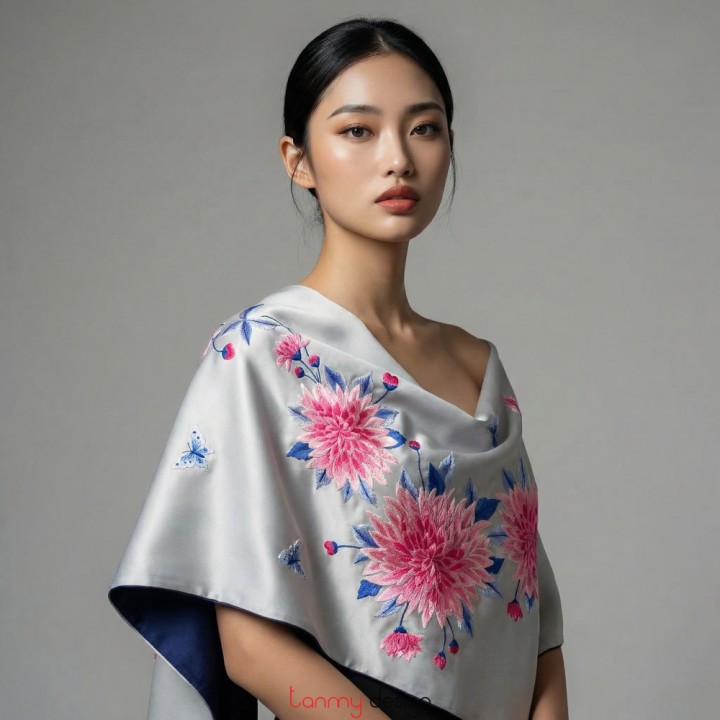
What Physical Signs Can You Check Once the Silk Scarf Arrives?
Once the scarf is in hand, look for several signs that agree with one another rather than one “proof.” Real silk may show changing luster, fluid folds, a smooth feel that warms against the skin, and soft wrinkles but rayon, acetate, polyester satin, blends, and fabric finishes can imitate each of these traits.
| Sign to check | What may support real silk | Why it is not proof |
|---|---|---|
| Luster | The sheen changes as the scarf moves under light rather than staying uniformly glossy. | Polyester satin, rayon and acetate can also shine; some genuine silks are deliberately matte. |
| Drape | Fabric falls into fluid, continuous folds and moves easily when released. | Fine synthetic fabrics can produce very similar movement. |
| Touch | Smooth and initially cool, then gradually warmer against the skin. | Modern synthetic fibers and surface treatments can closely imitate this feel. |
| Wrinkles | Gentle crumpling may leave soft creases that relax gradually. | Weave, fabric weight, humidity and finishing treatments can change wrinkle behavior. |
| Construction | Fine threads, neat edges and careful finishing can support the impression of a well-made silk scarf. | Good workmanship indicates craftsmanship, not fiber composition. |
The useful rule is therefore consistency, not a single trick. Ring, touch, wrinkle and shine checks are best treated as supporting clues. Avoid damaging a valuable scarf with a burn test simply to confirm authenticity; if certainty matters, compare these physical signs with the fiber label, seller documentation and professional fiber testing.
Real Silk vs Polyester Satin: What Differences Actually Matter?
The most important distinction is easy to miss: silk is a fiber, while satin is a way of weaving fabric. A satin scarf can therefore be made from real silk, polyester, or a blend. For an online buyer, appearance alone is not reliable proof.
| What to compare | Real silk | Polyester satin | What matters when buying online |
|---|---|---|---|
| Material | Natural protein fiber | Man-made fiber | Look for a clear fiber label such as “100% silk”, not simply “satin.” |
| Shine | Often softer, with more depth as light changes | Often brighter and more even | Useful as a clue, not proof. Finishing can make polyester look remarkably silk-like. |
| Feel and drape | Usually fluid, smooth, and less prone to static | Can feel very smooth and slippery | Modern polyester can closely imitate silk, so touch is not enough to confirm authenticity. |
| Moisture | Absorbs considerably more moisture | Absorbs very little moisture | This reflects a real material difference, but it is difficult to verify confidently from an online listing. |
| Care | Usually requires gentler washing and no chlorine bleach | Generally tolerates easier washing | Care instructions can provide another useful consistency check. |
| Verification | Fiber label and specification are strongest first checks | May be described vaguely as “satin” | Ask the seller for the exact fiber composition when the listing is unclear. |
For a meaningful or prestigious gift, treat shine, softness, drape, and price as supporting clues rather than evidence of real silk. The safer buying rule is to verify the stated fiber composition first, then check whether the care information and product description are consistent with that claim.
Does “Real Silk” Automatically Mean a High-Quality Silk Scarf?
No. “Real silk” tells you what the fiber is; it does not tell you how well the scarf was made. Two scarves can both be genuine silk yet differ greatly in weave, weight, color quality, finishing, embroidery, and overall workmanship.
A useful buying check therefore has two steps.
Step 1 - Verify the material. Look for clear information about fiber composition rather than relying on words such as “silky” or “satin.” Remember that satin describes a type of fabric surface, not necessarily silk: a satin scarf may also be made from polyester. Even “100% silk” alone does not establish how substantial, durable, or carefully finished the scarf will be.
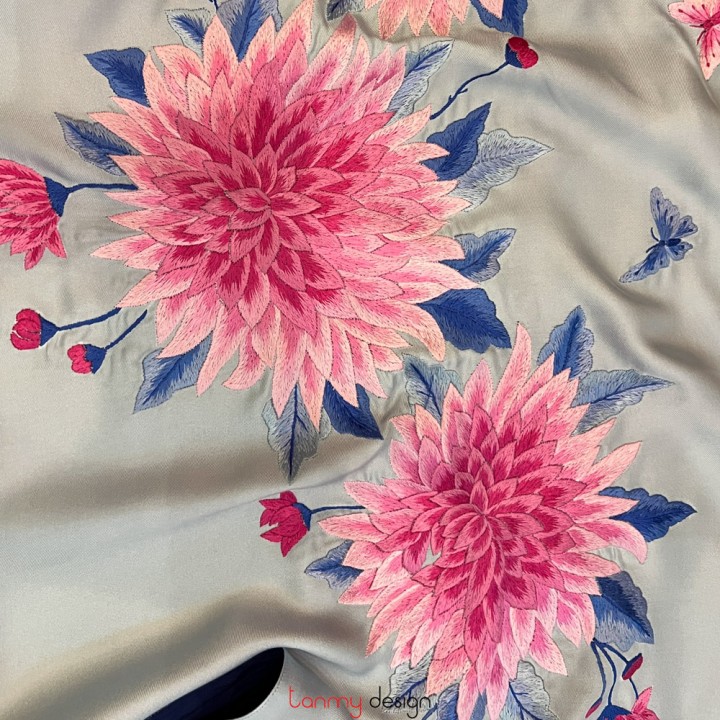
Step 2 - Judge the finished scarf. Examine whether the weave looks even, the fabric falls naturally rather than feeling stiff, colors appear rich and consistent, and printed details remain clean rather than blurred or bleeding. Pay particular attention to the edges: a finely executed rolled hem should be neat, soft, and flexible. If embroidery is present, stitches should be even, with no puckering, loose threads, or distorted fabric.
For a meaningful gift, then, authentic silk should be the starting requirement, not the final proof of quality. The stronger evidence is the combination of genuine material and visibly careful craftsmanship throughout the finished scarf.
Silk Scarf Buying Checklist: Buy, Ask for Proof, or Walk Away?
When buying a silk scarf online, judge the evidence around the claim, not words such as “luxury,” “silky,” or even “mulberry silk.” Textile rules in the U.S. and EU require clear information about what a textile is made from, and EU rules specifically restrict “100%,” “pure,” or “all” to products made entirely from the stated fiber.
BUY or continue considering it: the listing clearly states 100% silk or gives exact percentages for a blend; origin and seller or maker information are clear; and product photos, labels, and description agree. If a certification is claimed, check its number on the issuer’s official website rather than trusting the logo alone.
ASK FOR PROOF: pause when the seller uses terms such as “silky,” “silk-like,” “silk blend,” or “satin” without saying exactly what the scarf is made from. Satin describes how fabric is made, not which fiber it contains. Ask for a clear photo of the actual label showing material and origin, plus clarification of any conflicting details.
WALK AWAY: leave when a visible label contradicts the “100% silk” claim, the seller refuses basic material questions, or a claimed certification cannot be verified.
The key distinction: good documentation makes a silk claim more credible; it does not prove authenticity by itself. For an important gift, unresolved contradictions are reason enough not to gamble.
When buying a silk scarf online, judge authenticity by the consistency of the evidence rather than by appearance alone. A seller who clearly identifies the fiber, explains the material and construction, and provides detailed product information gives you a stronger basis for choosing than one relying mainly on words such as “silky” or “satin.” For an important gift, the practical rule is simple: if the material cannot be clearly verified before purchase, treat its silk claim as uncertain and ask for clearer proof before deciding.
Other articles
Vietnamese Silk Scarf Motifs: Meanings & Gift Choices
Square vs Long Silk Scarf: Which Makes a Better Gift?
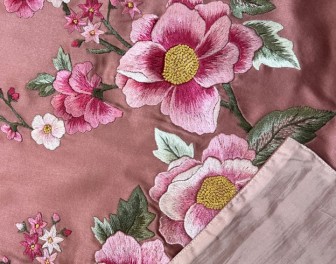
Hand-Embroidered vs Printed Silk Scarves: Which to Gift?
_cr_720x720_cr_336x264.jpg)
Meaningful Personalized Gifts: What Makes Them Feel Truly Special

Add: 61 Hang Gai St., Hoan Kiem Dist., Hanoi, Vietnam
Hotline: +84 936631368
Email: info@tanmydesign.com