
.png)
Is a Silk Scarf Worth the Price? How to Judge Quality and Durability
A silk scarf is worth a higher price when that price can be traced to qualities you can actually verify: what the fabric is made from, how it is woven, how much silk it contains, how cleanly it is printed and finished, and where the work was done. “100% silk,” “Mulberry silk,” or a luxury label alone cannot answer whether a scarf will wear well or justify its cost. For frequent wear or a meaningful gift, the stronger choice is the scarf whose quality remains visible beyond the name on the box.
What Makes a Silk Scarf Worth the Price?
A higher-priced silk scarf is easier to justify when the extra cost can be traced to either better physical performance, added craft and provenance, or both. The key is not to treat every premium feature as proof of greater durability: handwork, cultural meaning, and a documented maker can add real value without making the fabric physically stronger.
| What you pay for | What to verify | Durability / experience / both |
|---|---|---|
| Silk material | Fiber content, silk type, and whether the description clearly distinguishes silk from blends or synthetic satin | Both — affects feel, drape, comfort, and expected wear |
| Fabric substance | Momme, dimensions, weave, and visible weave regularity | Both — helps judge body, resilience, airiness, and styling |
| Printing and dyeing | Sharp print edges, even color, care guidance, and evidence of good color fixation | Both — affects appearance over repeated use |
| Construction | Secure hems, clean corners, no loose threads, puckering, or weak edges | Durability — poor finishing can shorten useful life |
| Hand craftsmanship | Whether hand-rolling, embroidery, printing, or weaving is actually stated for that specific scarf | Experience — skilled labor may justify price without proving stronger fabric |
| Provenance and cultural value | Named maker, workshop, production location, documented design or craft tradition | Experience — supports authenticity and gifting meaning |
| Lower purchase risk | Clear specifications, care instructions, returns, repair support, and traceable claims | Both — reduces uncertainty before and after purchase |
For Tân Mỹ Design, documented brand history can support provenance and cultural context, but it should not substitute for item-level evidence about fiber content, weave, finishing, or durability. A premium scarf is therefore worth more when the seller can show what performs better and what carries additional craft or cultural meaning, rather than asking the buyer to infer quality from price or prestige alone.
What Actually Affects Silk Scarf Durability?
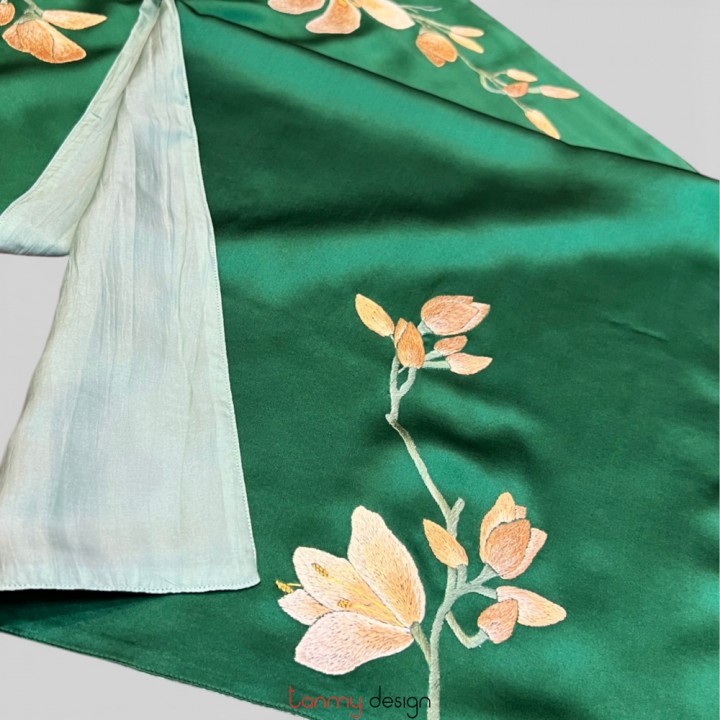
Silk scarf durability depends less on the words “100% silk” than on how the silk is woven, finished, handled, and cared for. Silk has good strength when dry, but repeated rubbing, snagging, moisture, heat, ultraviolet light, and harsh cleaning can gradually weaken it. The Canadian Conservation Institute specifically notes silk’s poor resistance to sunlight, ultraviolet radiation, strong acids, strong alkalis, and chlorine.
| Factor | What it changes | Check before buying | What may appear after use |
|---|---|---|---|
| Weave and density | Resistance to rubbing and pulled threads | Look for compact, even fabric without weak or open areas | Thinning, distortion, pulled threads |
| Surface structure | Risk of snagging | Very glossy fabrics with long exposed threads need more careful handling | Snags and local wear |
| Edges and hems | Strength at high-friction areas | Check corners, rolled edges, loose threads and fraying | Edge wear or opening seams |
| Dyes and finishes | Colour stability and surface behaviour | Look for clear care guidance and even colour | Fading, bleeding, stiffness changes |
| Light and heat exposure | Fibre ageing and colour loss | Consider how often the scarf will be worn outdoors | Fading, yellowing, brittleness |
| Cleaning and moisture | Shape, finish and fibre strength | Choose care requirements that match expected use | Shrinkage, water marks, distortion |
For frequent wear, a sound, compactly woven scarf with secure edges and realistic care requirements is generally a safer choice than an extremely light or snag-prone fabric. Weight or softness alone cannot prove longer life; construction, condition, exposure, and care must be judged together.
How Can You Judge Silk Scarf Quality Before Buying?
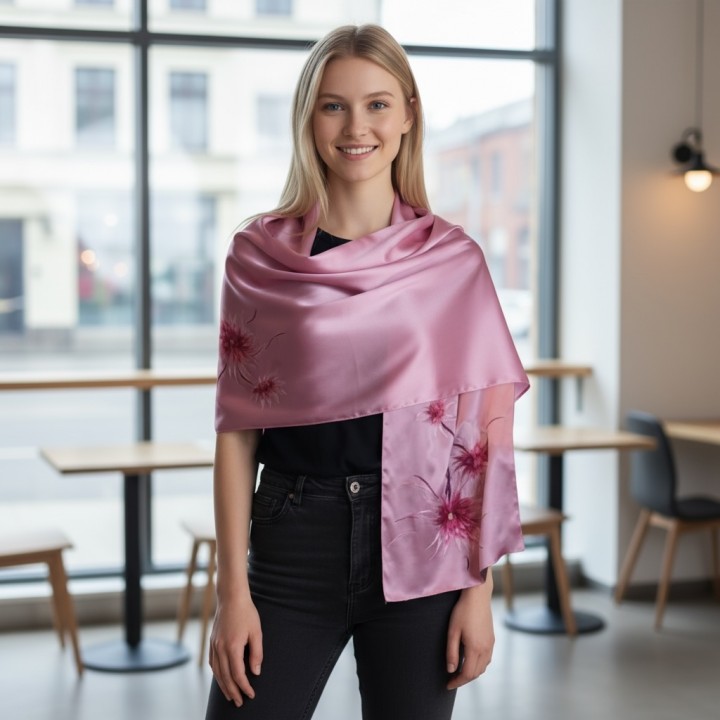
Before buying, judge a silk scarf in layers rather than relying on one sign such as softness, shine, “Mulberry silk,” or a luxury label. Start with what the seller can document, then inspect how well the actual scarf is made.
Use this pre-purchase checklist:
- Check the material description. Look for an exact fibre percentage, the fabric style such as twill or satin, weight if available, finished size, and care instructions. “Silky” or “silk touch” does not confirm silk content.
- Inspect the fabric closely. Look for an even surface without pulled threads, holes, thin patches, unexplained stiffness, or harsh plastic-like shine. Touch and drape are useful clues, but synthetic fabrics can imitate them.
- Examine the hems and corners. The edge should be securely enclosed, neat, and free from loose threads or puckering. A hand-rolled hem can show skilled work, but it does not by itself prove genuine silk or higher quality.
- Check printing or embroidery. Look for clean outlines, controlled colour, secure stitches, even tension, and no obvious bleeding, distortion, or loose threads.
- Verify origin and seller evidence. Ask for readable labels, close-up photographs, maker or workshop information, manufacturing origin, and a clear return policy.
The key distinction is simple: visible craftsmanship helps you judge execution; documentation helps you verify what the scarf actually is. Neither should replace the other. For an expensive scarf or an important gift, confidence should come from several matching pieces of product-level evidence, not from one impressive claim.
Is a Premium Silk Scarf Practical for Frequent Wear?
Yes. Provided the scarf is chosen for how it will actually be worn. “Premium silk” does not automatically mean “suited to daily use”: friction, sweat, oils, repeated knotting, cleaning, and storage create different kinds of wear, so the right weave, weight, finishing, and care routine matter as much as the fibre itself.
| How worn | Main wear risk | What to prioritise |
|---|---|---|
| Around the neck | Collar friction, jewellery, perspiration, makeup, repeated knots and cleaning | Medium-weight silk twill, secure hems, stable colour, and care instructions realistic for frequent washing |
| In the hair | Oils, sweat, styling products, repeated tying and snagging | Light-to-medium silk with sufficient density, strong edges, manageable size, and easy cleaning |
| On a bag | Continuous rubbing, tight knots, buckles, straps, rain and street dirt | Denser twill, robust finishing, compact size, and a design that does not show handling marks easily |
| Occasional decoration | Long storage, sharp folds, dust, hidden stains and trapped moisture | Stable construction, good storage guidance, suitable folding and low-maintenance care |
The important distinction is that quality and toughness are not the same thing. Silk can be beautifully woven, printed, and finished while still being vulnerable to abrasion, perspiration and prolonged sunlight. Government textile guidance and the CFDA both note silk’s sensitivity to perspiration, sunlight and abrasion.
For frequent wear, choose the scarf whose construction and care requirements match your routine not simply the one with the highest price or most luxurious description.

When Is an Expensive Silk Scarf Worth It and When Is It Not?
An expensive silk scarf is worth paying more for when the extra price buys something you can verify and actually value. Price alone is not evidence of better silk, better workmanship, or longer life.
| Priority | Worth paying more for | Verify | Do not pay extra when |
|---|---|---|---|
| Frequent wear | Denser fabric, secure edges, consistent stitching, good color retention | Fiber content, weave, fabric weight, hem, care instructions | The premium is mainly a logo or packaging |
| Refined appearance | Clean printing, precise borders, carefully finished corners, controlled drape | Inspect the print, reverse side, edges, and corners closely | “Luxury silk” is claimed without clear specifications |
| Meaningful gifting | Original design, documented maker, traceable origin, thoughtful presentation | Who made it, where it was produced, and what part involved skilled handwork | “Heritage” or “handmade” cannot be supported with specific information |
| Collecting or cultural value | Distinctive artwork, documented origin, limited production, or meaningful cultural authorship | Artist or maker information, production story, edition details where relevant | Rarity or prestige is claimed without documentation |
Fabric weight can matter, but more is not automatically better. Momme a common way to express silk fabric weight helps compare similar scarves, yet the right weight still depends on how the scarf will be worn. Likewise, a hand-rolled hem can reflect skilled work, but only when the finishing itself is neat and durable.
The useful rule is simple: pay more when the premium produces a visible, traceable, or personally meaningful difference not merely a more prestigious description.
How Do You Protect the Value of a Silk Scarf After Buying It?
Protecting a silk scarf is less about following one universal cleaning routine and more about avoiding the kinds of damage silk cannot easily recover from: friction, harsh washing, twisting, heat, prolonged light, and damp storage.
Conservation guidance also draws an important line between a sound modern scarf and one with embroidery, paint, beads, metallic threads, fragile silk, or uncertain finishes; the latter may require professional care rather than home washing.
Do: handle the scarf with clean, dry hands; support the whole fabric rather than pulling from an edge; blot spills instead of rubbing; dry it flat and away from direct heat or sunlight; and store it completely dry, preferably flat with clean, non-acidic tissue or cotton. Light damage accumulates over time and can both fade dyes and weaken silk fibers.
Avoid: wringing, twisting, scrubbing, tumble-drying, aggressive stain treatments, sharp repeated folds, and leaving the scarf exposed to strong sunlight. For decorated or historically valuable pieces, avoid experimental washing, steaming, or ironing.
Check the label first: “silk” describes the fiber, not every dye, weave, finish, or decoration added to it. If the maker permits hand-washing, cool water, a small amount of silk-compatible detergent, gentle handling, and towel pressing are reasonable methods. If the label says dry clean only, or the scarf is unusual or valuable, that instruction should take priority over general silk-care advice.
The real measure of value is not whether a silk scarf is expensive, but whether its price has a clear reason behind it. Look for a scarf whose material, construction, finishing, origin, and care requirements can be explained and inspected rather than assumed from prestige language alone. For an important gift, that distinction matters even more: the scarf should carry substance as well as beauty. Before paying the premium, make sure you can answer four questions with confidence: what is it, how was it made, how was it finished, and where did it come from?
Other articles
Vietnamese Silk Scarf Motifs: Meanings & Gift Choices
Square vs Long Silk Scarf: Which Makes a Better Gift?
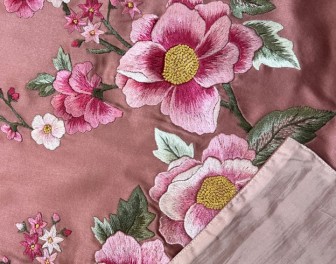
Hand-Embroidered vs Printed Silk Scarves: Which to Gift?
_cr_720x720_cr_336x264.jpg)
Meaningful Personalized Gifts: What Makes Them Feel Truly Special



Add: 61 Hang Gai St., Hoan Kiem Dist., Hanoi, Vietnam
Hotline: +84 936631368
Email: info@tanmydesign.com