
.png)
Silk Scarf Gift for Women: Choose by Style, Color and Use
A silk scarf feels personal when it fits the woman who will wear it—not simply the occasion on which it is given. Her recurring colors, preferred level of detail, and the way she already uses accessories can offer useful clues: a restrained wardrobe may call for an understated scarf, while a more expressive style can support stronger color or pattern. These clues are most reliable when you know her well; when you do not, versatility matters more than trying to guess her personality from a single outfit.
Start With Her Style Before Looking at Individual Scarves
Before choosing a silk scarf gift for women, look for visible wardrobe habits rather than guessing her personality.
The most useful clues are how restrained or expressive her clothes are, whether she usually wears prints, how prominent her accessories are, and how formally she tends to dress. These features affect whether a scarf will blend naturally into what she already wears.
| What you observe | Safer scarf direction | Why |
|---|---|---|
| Mostly solid, restrained clothing | A more noticeable print or color accent | The scarf can become the focal point without competing with the outfit. |
| Frequent prints or strong detailing | Quieter pattern or familiar base colors | Reduces competing visual elements. |
| Minimal jewelry and accessories | Let the scarf lead at the neck | There are fewer existing statement pieces to compete with. |
| Bold jewelry, belts, or bags | Use the scarf more subtly on a bag, wrist, or belt | Keeps it complementary rather than adding another dominant element. |
| Structured, professional clothing | Refined colors and neater neck styling | Better matches the formality of tailored outfits. |
| Relaxed everyday clothing | Looser styling and potentially stronger prints | Casual clothing allows more flexibility in placement and color. |
The important limit is that wardrobe is evidence, not a verdict. Work clothes, routines, or different “modes” of dressing can hide preferences that appear only on weekends, while travelling, or at events. Accessories are also a common place to experiment.
So use her wardrobe to narrow the field, not define her taste completely. A practical final check is whether you can picture the scarf working with several real outfits or occasions she already has.
_cr_720x720.JPG)
Classic or Statement Silk Scarf: Which Is the Safer Gift?
When you know little about the recipient’s personal style, a classic silk scarf is usually the lower-risk gift. The reason is not that classic means plain: it means the scarf is less likely to dominate what she already wears. Smaller or more orderly motifs, moderate contrast, and adaptable colors generally make a scarf easier to combine with several outfits.
| Classic scarf | Statement scarf |
|---|---|
| Complements an outfit | Becomes a focal point |
| Smaller or more structured motifs | Larger or visually dominant composition |
| Moderate contrast | Stronger contrast or visual weight |
| Safer when preferences are uncertain | Better when you know she enjoys expressive accessories |
The important distinction is visual dominance, not simply brightness. A richly patterned heritage design can still feel classic when its composition is balanced, while a black-and-white scarf can make a strong statement through oversized motifs, scale, or dramatic contrast.
For a formal gift to a partner, VIP, or someone whose wardrobe you do not know well, use one practical test: can you realistically imagine the scarf working with at least three different outfits? If not, move toward a quieter design. Choose the statement piece when you have stronger evidence that bold accessories are already part of her style.
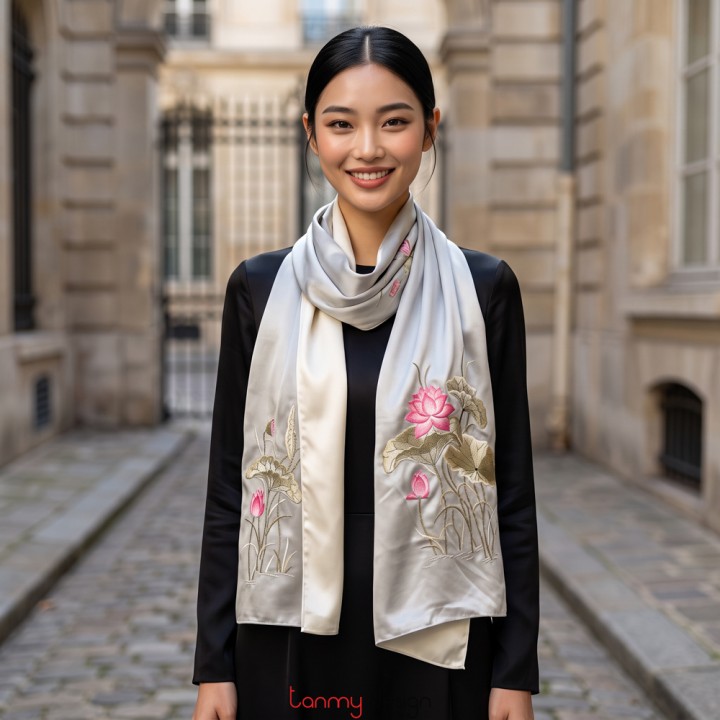
How to Choose a Silk Scarf Color Without Knowing Her Favorite Color
When you do not know her favorite color, the safest starting point is what she already wears, not her age, nationality, or a broad assumption about skin tone.
Those shortcuts are too imprecise: people with similar complexions can have different undertones, levels of contrast, and personal preferences, all of which change how a scarf color looks and feels.
Look first for colors that repeat in her wardrobe, especially coats, jackets, dresses, handbags, and jewelry. If navy, cream, black, camel, grey, or another neutral appears frequently, a scarf that repeats or softly complements that palette is more likely to work across several outfits. Styling guidance consistently treats these recurring wardrobe colors as stronger clues than demographic rules.
Then decide whether the gift should blend in or stand out. For an easy-to-wear silk scarf, choose a familiar neutral or muted shade connected to her existing wardrobe. For a more expressive gift, use an accent color she already wears in smaller details or select a pattern that combines one familiar base color with a stronger accent.
A useful rule is simple: the less you know about her preferences, the closer the scarf should stay to colors she already chooses for herself. This reduces guesswork while still leaving room for a distinctive, meaningful gift.
Hair, Neck, Bag or Shoulders: Choose the Scarf by How She Will Use It
A silk scarf gift should be chosen by where she is most likely to wear it, because the amount of fabric that works beautifully on the shoulders can become bulky in the hair or awkward on a handbag. Size is therefore not simply a matter of appearance; it determines which styles are genuinely practical.
| Likely use | Practical format | Main trade-off |
|---|---|---|
| Hair | 70–90 cm square | Large enough for head wraps; bigger sizes can create bulky knots |
| Neck | 70–90 cm square or long rectangle | Small scarves make neat accents but limit draping and double wraps |
| Bag | 25–55 cm square | Compact knots suit handles; larger scarves need considerable folding |
| Shoulders | 90 cm+ square or long rectangle | More fabric improves coverage but makes small knots less tidy |
Across the available guides, the 90 × 90 cm square emerges as the strongest compromise when the recipient may use one scarf in several ways: it can be folded into a narrow band for hair or neck styling, reduced for a bag accent, or opened for a light shoulder drape.
That does not make 90 cm automatically right for every woman. If she mainly decorates her hair or handbag, a smaller square reduces unnecessary bulk. If she prefers shawl-like draping, choose more fabric. For a meaningful silk scarf gift, let her most likely use determine the size first; versatility should be the fallback when you are unsure.
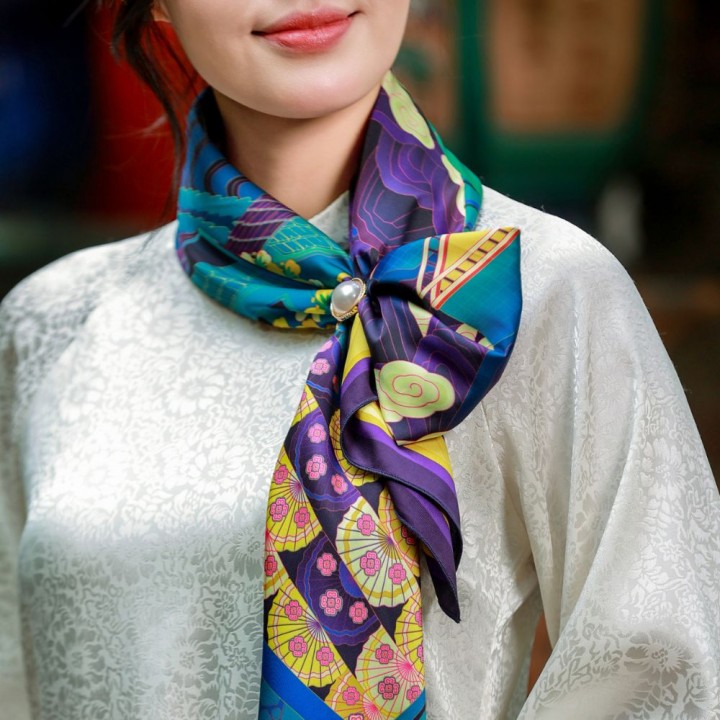
Put Style, Color and Use Together to Choose the Right Scarf
Choose a silk scarf in this order: likely use → existing style → color. This sequence reduces the risk of selecting a beautiful scarf that never leaves the gift box. Gift-giving research shows that recipients tend to value gifts they can actually use more than givers expect, making practical fit a stronger starting point than visual impact alone.
First, picture how she would realistically wear it: around the neck, in her hair, on a handbag, or mainly for special occasions. That determines which shape and size deserve consideration. Next, look at her existing wardrobe. A scarf is easier to wear when its pattern and overall character sit naturally beside the clothes she already chooses; practical scarf guidance therefore recommends using her dominant wardrobe palette and usual level of pattern as filters.
Only then refine the choice by color. Rather than asking which color is universally “best,” choose one that works with her established palette and intended use.
There are exceptions. If she has explicitly named a favorite color or motif, trust that direct preference over inference. And for a ceremonial or statement gift, artistic meaning, cultural symbolism, or visual impact may reasonably matter more than everyday versatility.
The useful rule is simple: start with use unless the purpose of the gift gives you stronger evidence to start somewhere else.
When the Story Behind the Scarf Matters as Much as the Design
For a high-value silk scarf gift, the story matters only when it can be checked. A convincing piece should connect its beauty to specific evidence: who made it, what it is made from, how it was produced, where its design or craft tradition comes from, and which outside sources support the heritage story.
Use this quick verification checklist:
- Maker: Is a named maker, workshop, artist, or family craft business identified rather than simply described as “artisan-made”?
- Material and process: Are the silk, embroidery, dyeing, weaving, or finishing methods described clearly enough to verify?
- Origin: Is the cultural or design story linked to a documented place, tradition, archive, museum record, or established craft history?
- Independent evidence: Are major claims about heritage, craftsmanship, awards, or notable visitors supported beyond the brand’s own website?
- Claim precision: Does the wording distinguish documented history from broader promotional claims?
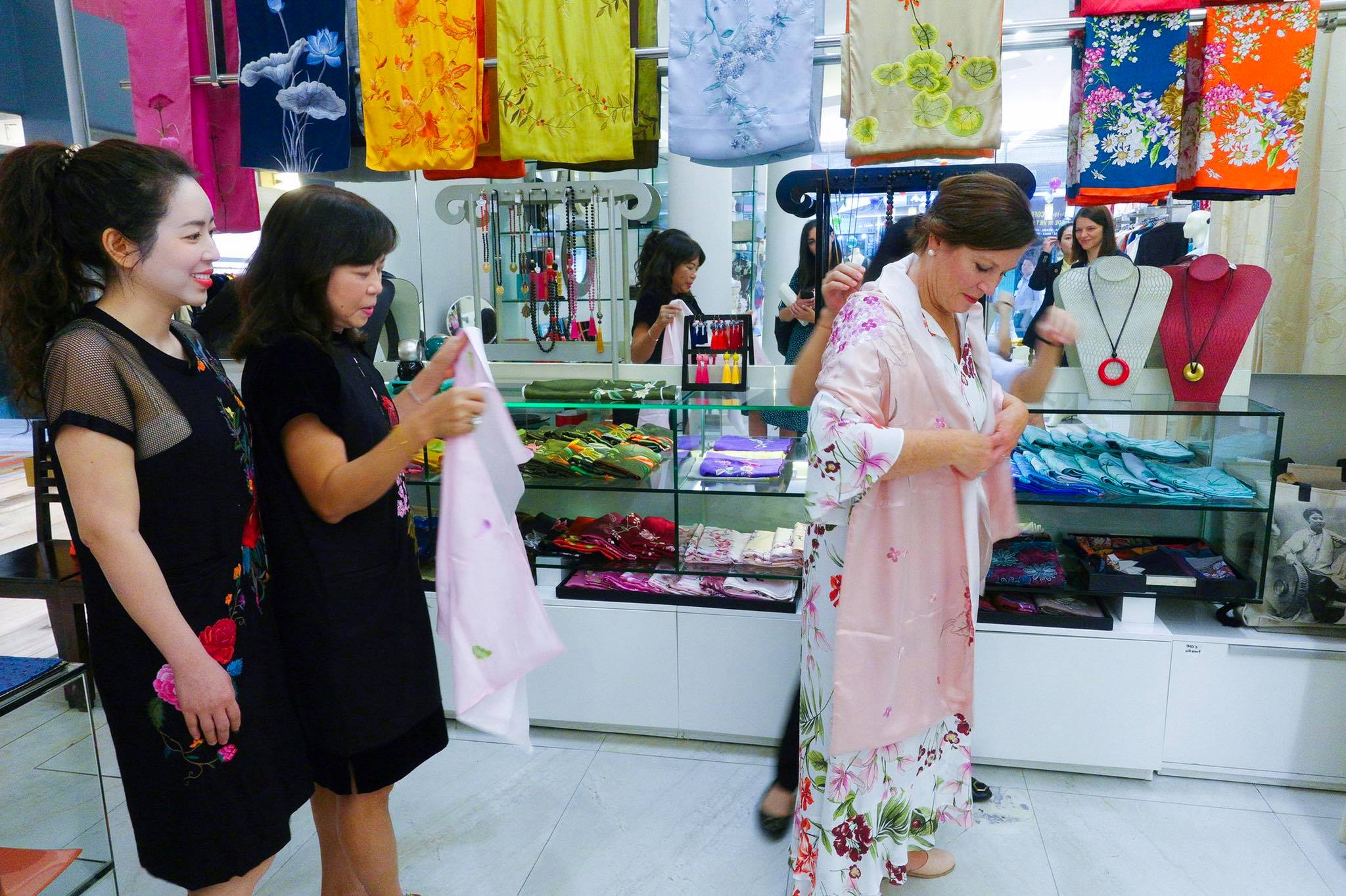
Tân Mỹ Design offers a useful example of why this distinction matters. Independent Vietnamese media trace the family embroidery business to 1969, identify three generations of family leadership, and repeatedly document its hand-embroidery tradition. We also record visits from international political and royal figures. However, stronger phrases such as “four generations of artisans” require more careful wording because independent reporting clearly documents three active generations, while references to the fourth appear mainly in brand-owned material.
For an important gift, that level of evidence turns “heritage” from decoration into something the recipient can genuinely value.
Silk Scarf Gift Checklist: What to Check Before You Buy
Before buying a silk scarf gift, separate what you can verify from what you can only estimate about the recipient. This prevents a common mistake: choosing a beautiful scarf while overlooking whether it is authentic, practical, or likely to be worn.
Use this final checklist:
- Material: Look for a clear fiber description such as “100% silk” rather than vague wording such as “silky” or “silk feel.”
- Size and shape: Check exact dimensions. Smaller squares suit hair, neck, wrist, or bag styling; larger squares and long scarves allow more ways to drape or wrap.
- Craftsmanship and origin: Look for clear information about how the edges are finished, where the scarf is made, and how the design is produced.
- Gift readiness: Confirm packaging, care instructions, delivery timing, and exchange or return conditions before an important occasion.
- Color: If you know her wardrobe, choose within colors she already wears. If you know little about her, softer neutral or muted shades generally create fewer conflicts with existing clothes.
- Likely use: Consider whether she would wear it around the neck, in her hair, on a bag, or as a light wrap.
The key distinction is simple: verify quality and purchase conditions; estimate style fit cautiously. When uncertain, favor versatility over the strongest visual statement.
The most thoughtful silk scarf gift is one that gives the recipient room to make it her own. Start with what you genuinely know about her style, then choose color, pattern, and intended use with that evidence in mind rather than imposing an unfamiliar look. If your knowledge is limited, favor a scarf that can work across several outfits and occasions. For a representative gift, craftsmanship and cultural meaning can then add substance beyond appearance qualities that sit at the heart of Tân Mỹ Design’s approach to Vietnamese gifting.
Other articles
Vietnamese Silk Scarf Motifs: Meanings & Gift Choices
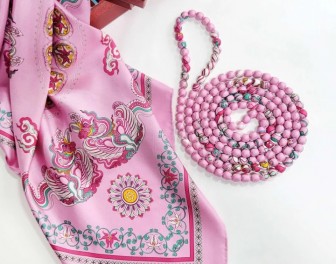
Square vs Long Silk Scarf: Which Makes a Better Gift?
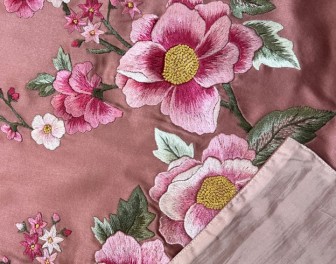
Hand-Embroidered vs Printed Silk Scarves: Which to Gift?
_cr_720x720_cr_336x264.jpg)
Meaningful Personalized Gifts: What Makes Them Feel Truly Special



Add: 61 Hang Gai St., Hoan Kiem Dist., Hanoi, Vietnam
Hotline: +84 936631368
Email: info@tanmydesign.com