
.png)
Top Hand Embroidery Shops in Hanoi for Cultural Souvenirs
The moment you step into a true hand embroidery shop in Hanoi, the air shifts - slower, more reverent, like entering a living archive of artistry. Here, every thread carries a story, every stitch a legacy passed down through generations. For those who collect meaning, not just material, these sanctuaries of craftsmanship offer more than a souvenir - they offer a piece of soul.
What Makes Vietnamese Hand Embroidery Special
Vietnamese hand embroidery is special because it elevates needlework into a fine art that embodies cultural soul, human imperfection, and interpretive storytelling. Unlike machine-made textiles, each piece is uniquely handcrafted - taking weeks to years - blending intricate folk motifs and painterly stitching techniques.
This slow process is not a flaw but a marker of value. For example, artisans may spend over 3,000 hours on a single thread painting, using ultra-fine silk strands to shade like oil paint. Machines, by contrast, produce exact copies in minutes, lacking emotional nuance or texture.
Symbolism is another key differentiator. Hand motifs like lotuses or banyan trees aren’t just decorative - they carry national identity and local stories. Because each artisan interprets the design slightly differently, no two pieces are ever alike, making every item a personal expression of Vietnamese heritage.
Whether chosen by diplomats, art collectors, or mindful travelers, these embroidered works stand apart not for perfection - but for presence, patience, and soul.
How to Identify Authentic Hand Embroidery
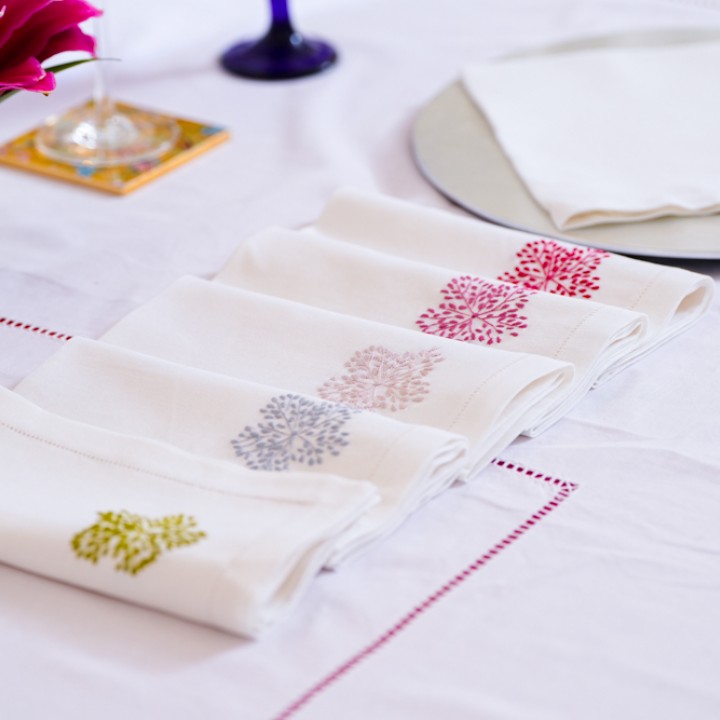
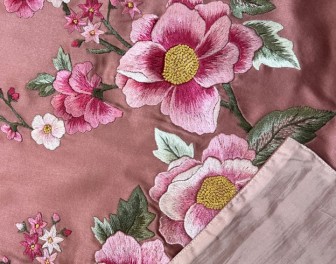
Authentic embroidery can be identified by three forensic traits: uneven thread thickness, visible front-back variation, and shifting light reflection - none of which occur in mass-produced pieces. These distinct signatures come from human limitations and intentional craft decisions found only in handmade works.
In renowned Hanoi villages like Quat Dong, artisans manually split silk strands into micro-filaments to shade each motif, causing natural thread variation. Unlike industrial threads of fixed weight, this results in organic, gradient-like textures.
You can also assess the stitch underside: authentic pieces may show knots, thread "travel," or double-sided craftsmanship - never machine-style bobbin tracks or leftover stabilizer paper. Most telling of all, hand-satin stitches "float" on fabric, catching light from many angles; this multi-directional sheen is flattened in machine-made work by tension craters.
For buyers needing proof, inspect:
- Tourists: Feel for textured bumps and check the back for messiness - not perfect symmetry.
- Collectors: Use macro lenses to verify split-thread shading within motifs.
- Export clients/museums: Conduct thread burn tests or FT-IR spectroscopy to confirm natural silk.
Finally, provenance matters. Look for artisan signatures or village-issued marks (like Quat Dong stamps). Avoid vague “Handmade in Vietnam” tags without traceable lineage.
Tân Mỹ Design – The Heritage House of Hand Embroidery
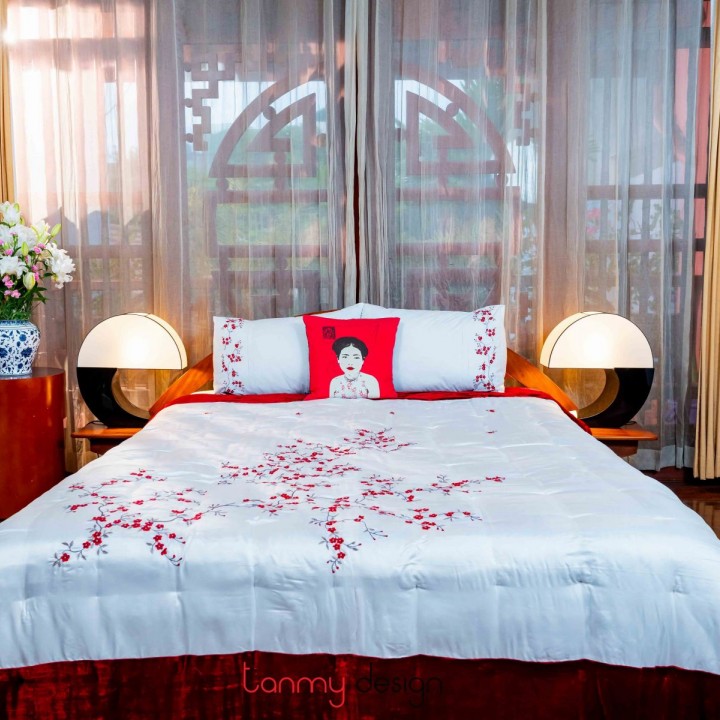
Tân Mỹ Design is a heritage hand embroidery shop in Hanoi, renowned for preserving four generations of matriarchal craftsmanship since 1969.
Originally creating handkerchiefs during the Vietnam War, it has evolved into a 1,000-square-meter concept store that combines artisanal legacy with modern retail. Rather than mass-producing, it sustains a close-knit network of artisans who craft each piece by hand, anchoring the brand in authenticity and “slow fashion.”
Endorsed by The New York Times and frequented by dignitaries like Bill Clinton and Michelle Bachelet, the store holds cultural and diplomatic significance. By showcasing high-end Vietnamese designers and offering premium products like silk bedding, Tân Mỹ signals prestige while helping preserve and elevate the local embroidery economy.

Other Notable Hand Embroidery Shops in Hanoi
| Hand Embroidery Shop | Design Style | Product Focus | Ideal For | Location Type |
|---|---|---|---|---|
| XQ Hand Embroidery | Hyper-realistic portraits, abstract thread painting | Large wall art, framed decor, double-sided screens | Art collectors, high-end gift buyers, experience seekers | Destination villas or cultural “museums” |
| Lụa Tơ Tằm Shops | Elegant floral, minimal motifs enhancing fabric | Silk scarves, ao dai, bedding, handbags | Luxury shoppers, diplomats, wearable gift seekers | High-traffic retail zones (Old Quarter) |
| Hạ Thảo (Traditional) | Classic folk art: rural scenes, lotus, religious icons | Small framed art, handkerchiefs, table runners | Authenticity seekers, cultural tourists, bulk buyers | Craft villages or local markets (e.g., Quat Dong) |
When and Where to Buy for the Best Experience
The ideal time to visit a hand embroidery shop in Hanoi is during the cooler months of October to February, particularly in the morning between 8:00–11:00 when soft daylight enhances textile detail.
This early light - especially on East-facing streets like Hàng Gai - makes silk texture and stitching more vivid, creating a premium visual impact for intricate works like double-sided embroidery. While tourist boutiques often open later, early visits attract "scouting" shoppers, influencing later high-intent purchases.
If you're looking for authentic souvenirs or premium gifting pieces, the Old Quarter is perfect for impulse finds like scarves and placemats, thanks to its high footfall and proximity to landmarks. However, if you seek artful wall pieces or custom textiles, head to Tây Hồ (West Lake). Its relaxed atmosphere allows for longer visits, private consultations, and viewing larger works from a distance - crucial for appreciating embroidered detail.
Pre-Tet season adds urgency, especially for locals purchasing fresh home decor, and walkability rises due to Hanoi’s mild climate.
For a deeper emotional connection and higher-value selection, choose shops offering artisan demos or calm “oasis” spaces like Tan My Design. These enhance dwell time - an essential factor linked to higher purchase value.
Tip: Plan morning visits for visual clarity, but schedule buying in the afternoon when dwell time and conversion rates peak.
Why Buying from Authentic Shops Matters
Buying from an authentic hand embroidery shop in Hanoi directly sustains Vietnam’s cultural heritage while supporting artisans' livelihoods. Mass-produced souvenirs may look appealing, but they divert funds from traditional villages where embroidery is a living art, not a nostalgic display.
When you purchase from reputable outlets linked to craft cooperatives - like those in Quat Dong or Van Lam - you’re bypassing middlemen, ensuring up to 50% of the price goes back to the maker. This income helps young apprentices stay in the craft instead of leaving for factories, preserving ancestral techniques.
Each handcrafted piece becomes a ripple in a larger ecosystem - where your spending fuels local reinvestment, vocational training, and the prestige of OCOP-certified artistry. Authentic shops don’t just sell fabric; they sell continuity, pride, and cultural soul.
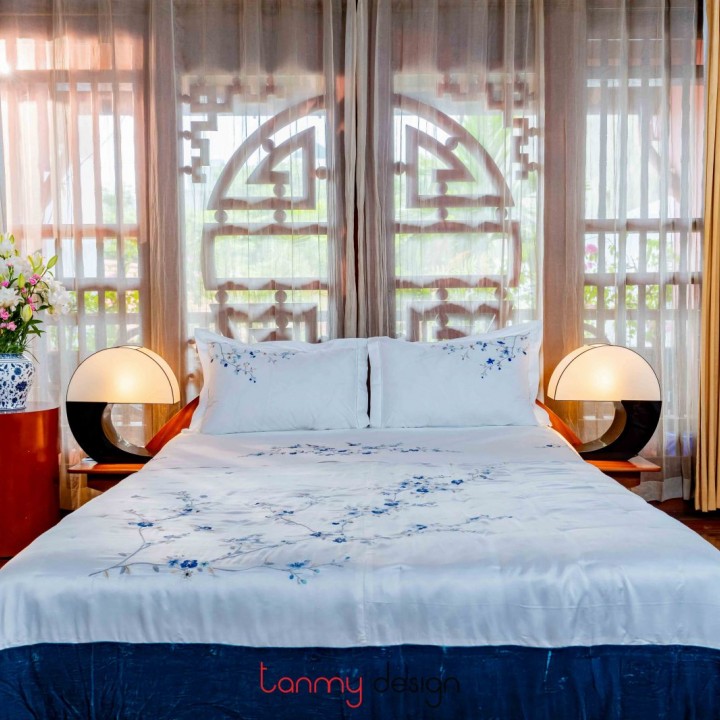
In a world of mass production, choosing hand embroidery is an act of discernment - and of honor. Whether you're seeking a gift that speaks of heritage, a collector’s one-of-a-kind treasure, or an heirloom for your home, the finest shops in Hanoi deliver more than beauty - they deliver legacy. Let your next keepsake be one that whispers history, woven with care from the artisans at Tân Mỹ Design.
Other articles

Vietnamese Silk Scarf Motifs: Meanings & Gift Choices
Square vs Long Silk Scarf: Which Makes a Better Gift?
Hand-Embroidered vs Printed Silk Scarves: Which to Gift?
_cr_720x720_cr_336x264.jpg)
Meaningful Personalized Gifts: What Makes Them Feel Truly Special



Add: 61 Hang Gai St., Hoan Kiem Dist., Hanoi, Vietnam
Hotline: +84 936631368
Email: info@tanmydesign.com